
Did anyone ever tell you not put all of your eggs in one basket?

Putting all of your eggs in one basket, puts all of the eggs at risk. But, placing a few of the eggs in another basket automatically reduces the risk that you will lose all of your eggs. The strategy of spreading the eggs to multiple baskets is called DIVERSIFICATION. In this lesson, we will discuss this important concept as a cornerstone to investing.
Education:
The theory of diversification rests in the simple thought that as some items lose value, other items gain in value. The market is volatile and can change on a dime. Just think back to economic crash of 2008. Bad news from one sector of the economy, one foreign country, or almost anything can cause the market to react negativity. This inherent volatility is why you have to hedge against sudden downturns by investing in a variety of investments in your portfolio.
When I began my graduate program in 2003, one of the first classes that I took was Personal Financial Planning. In that class, I learned that DIVERSIFICATION REDUCES RISK. Unbelievably, this idiom has stuck with me and I will never forget the truth in those three words.
Idiom #1 – Diversification reduces risk
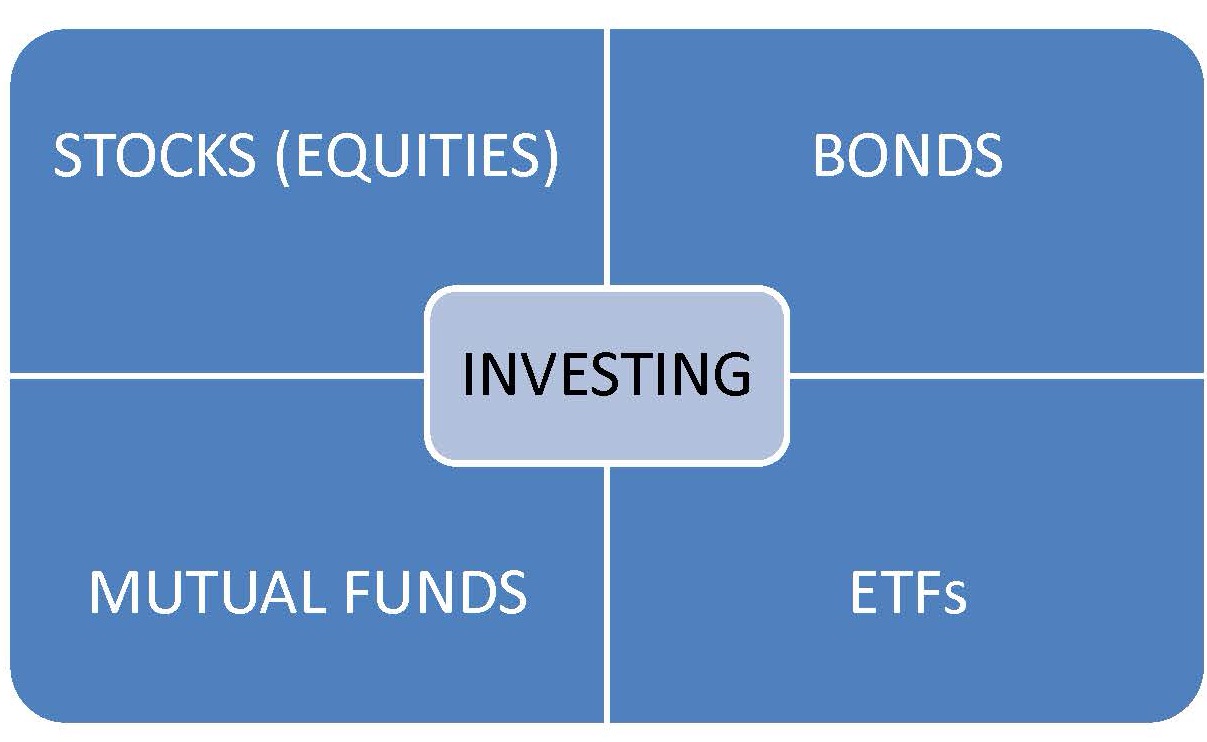
Applying this theory to the grid from Lesson #14, indicates that we should spread our eggs (dollars) to various classes of investments to mitigate the risk of losing all of our eggs (dollars). Moreover, it suggests that even if you favor one investment class – say stocks – then surely you would not invest all of your money in one stock. If you say, yes I would, then let us revisit the Enron case.
“On Dec. 2, 2001, Enron filed for bankruptcy protection in the biggest case of bankruptcy in the United States up to that point. Roughly 5,600 Enron employees subsequently lost their jobs.” (CNBC News)
This real tragedy is that of those 5,600 Enron employees, many lost everything because they failed to diversify. Let us look at what they did wrong.
- They worked for Enron – their salary income was tied into Enron.
- They invested in Enron – their discretionary and retirement money was tied into Enron.
This is clearly a case where all of their eggs were in the same basket. It is quite evident that they bet the house on Enron’s success and the house lost. Enron’s demise took them down financially because all of their finances were tied into this one company. Had they simply remembered Idiom #1 – Diversification reduces Risk, they would have made sure to invest in different stocks through their retirement plans. Unfortunately, it is a cruel lesson that came at a very expensive price. In the next lesson, we will examine Idiom #2 – Multiple Streams of Income and how that could have helped many of Enron’s employees.
Resources:
Suzy Orman – Personal Finance Guru – A two-time Emmy Award-winning television host, New York Times mega bestselling author, magazine and online columnist, writer/producer, and one of the top motivational speakers in the world today, Orman is undeniably America’s most recognized expert on personal finance.
Important terms from this lesson:
|
Term |
Definition |
| Diversification | A risk management technique that reduces risk by investing in a variety of investments within a portfolio. |
| Volatility | Refers to the amount of uncertainty or risk. |
| Hedge | To mitigate risk. |
| Portfolio | Your basket of eggs or investments. |
Action Step: Which of the following illustrates diversification?
List five of your favorite stocks or corporations. Answer the three questions:
1. Are the companies in the same industry? Yes or No
2. Are the companies in the same region? Yes or No
3. Are the companies the same size? Yes or No
If you answered yes to any of the three questions, then your favorite stocks may not achieve diversification.
 Education and Action