
“It is not, Lord send me the money. It’s Lord, aim me at the fish.” – TD Jakes

Investing is like deep sea fishing. If done properly, one small bait can catch an enormous fish. However alike, deep sea fishing and investing are not for the faint of heart. These activities are reserved for the thrill seekers who are willing to put in on the line for a chance to catch the big fish. Are you a thrill seeker?
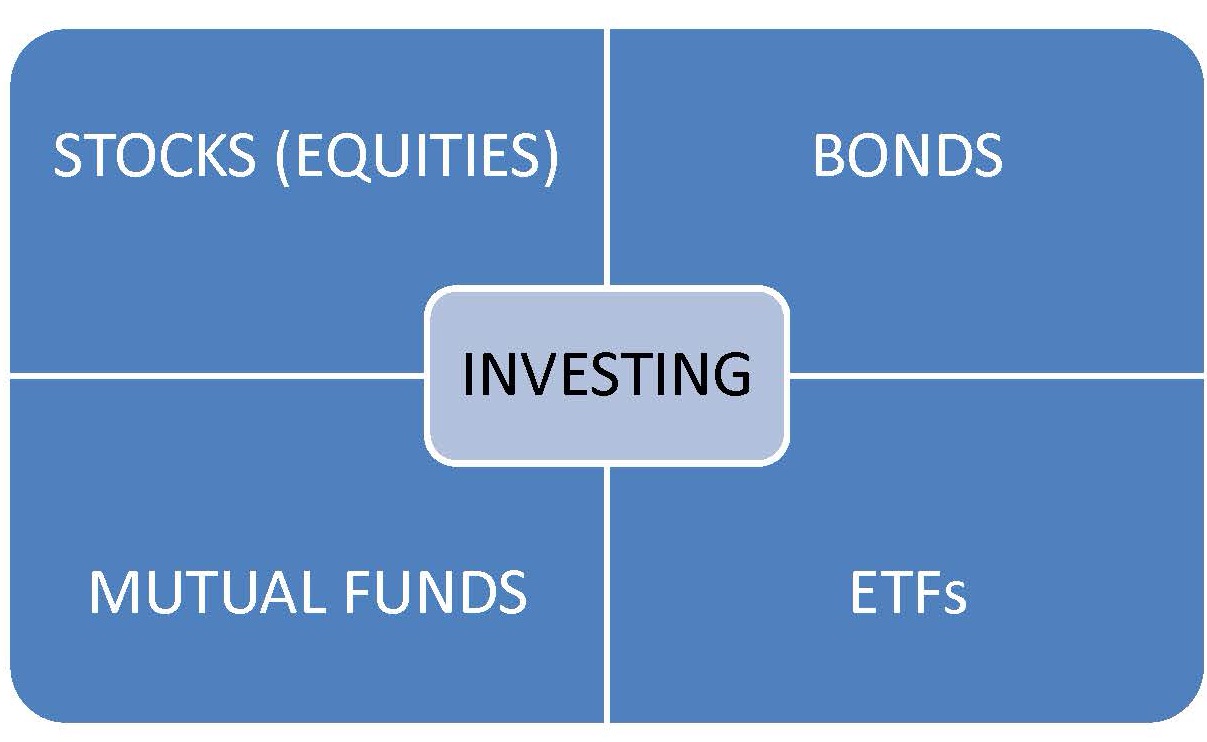
Any time you take a risk to gamble on catching a big, bigger or the biggest fish, it is called investing. With such a broad application, we are going to narrow our efforts to the four basic categories of capital investing for wealth building purposes.
Education:
In Lesson #8, Exploring Savings Alternatives, I told you that investing is NOT a savings alternative. However, I did not say that it was not a critical element in the wealth building process. The upside is that investing the RIGHT way can make you wealthy, rich, a tycoon, a millionaire, and a billionaire. However, the downside is that…
- Investing is RISKY!
- Investing can cause you to lose your money!
- Investing is a gamble!
- Investing is a speculative activity!
- Investing claims winners and losers everyday!
Now that we have discussed some of the negative aspects of investing, why would people partake in this risky activity? Because, investing can lead to a HUGE reward!

This phenomenon is what we call the Risk vs. Reward Principle. Think of investing as gambling the house. If you are lucky, then you can make a lot of money. However, if you gamble wrong, then you can lose everything including the money that you put in.
Since we know that investing involves a measure of RISK. Your relationship to risk, is called your RISK TOLERANCE. People who like to gamble in favor of a high return or reward are called, RISK SEEKERS. While people who are not willing to make this gamble are called, RISK ADVERSE. Which are you?
In capital investing, there are two ways to make money – capital gain (appreciation) and dividend income (to be discussed in the next lesson).
To illustrate the principle of ‘capital appreciation’, let us take a look at Google. When Google offered its stock for the first time, it sold for $85 per share. This past Friday, that same stock sold for $1,136.19 per share. That means that if you purchased one share in 2004 and sold it on Friday, you would have made $1,051.19. Now, what if you would have purchased 10 shares? You would have made $10,511.90 ($1,051.19 x 10). I love math, but it does not take a genius to see that this strategy can make your wealthy. Your $85 capital appreciated to $1,051.19. Kaboom!!!
We will continue this discussion in Lesson #15.
Resources:
Jim Cramer (Mad Money, CNBC) – A nightly television show that teaches the principles of stock investing. Airs nightly at 7p and 11p on CNBC.
Important terms from this lesson:
|
Term |
Definition |
| Risk | The chance that an investment may not pay off or the actual return is different than expected. |
| Risk vs. Reward or Risk vs. Return | The principle that a potential return rises with an increase in risk. |
| Risk Seeker | The search for greater volatility and uncertainty in investments in exchange for anticipated higher returns. |
| Risk Adverse | Unwillingness to take on additional risk even for a higher return. |
| Capital | Capital is more durable and is used to generate wealth through investment. |
| Capital Gain (Appreciation) | A rise in the value of an asset based on a rise in market price. |
Action Step: What is you risk tolerance? Are you a RISK SEEKER or are you RISK ADVERSE?
Go to http://www.kmsykescpa.com/calc-section.php?calc=inv08 and answer the 10 questions to determine your risk tolerance level.
 Education and Action