Lesson #23 – Building wealth – Step 1: Create/Develop Assets – Bonds 101 – U.S. Savings Bonds

Did you know that Dr. Martin Luther King Jr. is pictured on the Paper Series I $100 Bond?
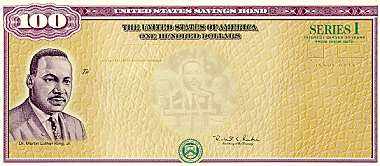
sbimlk1

Now that’s a great bit of trivia to test your kids during Black History Month.  I guess it’s not all about the Benjamin’s after all. LOL…a little accountant’s humor interjected there.  Okay, let’s get started.

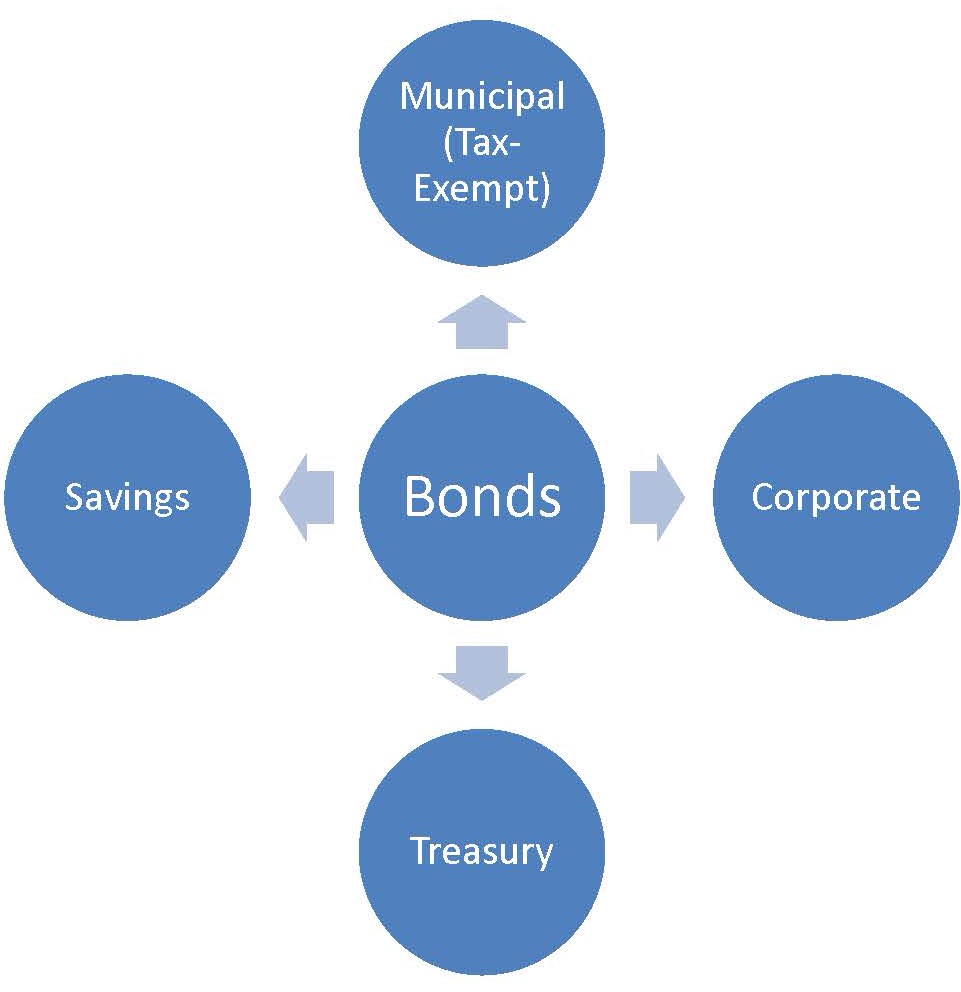
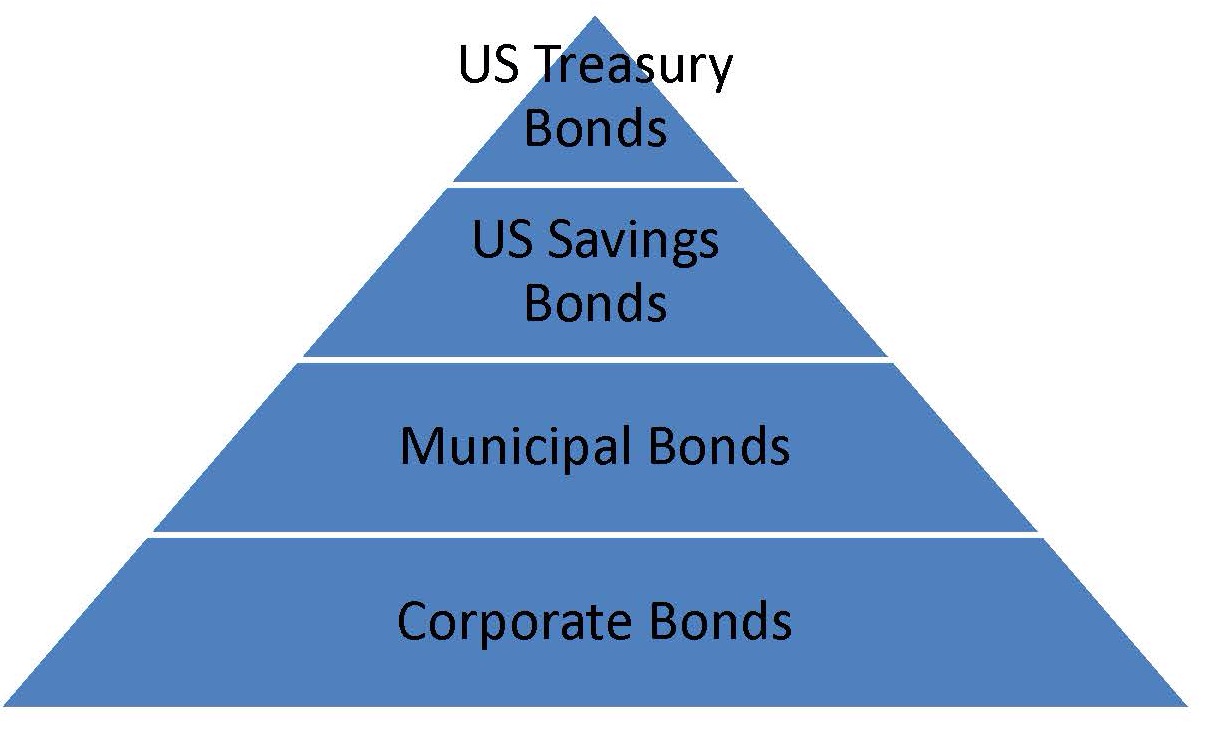
Now that you have a basic understanding of how to make money with bonds and how to pick them based on the two features of quality and duration, we can now advance this discussion to explaining the different types of bonds. The United States Government offers two main classes of bonds – treasury bonds and savings bonds.  In this lesson, we will delve into the U.S. Savings Bonds.

Since the government cannot go to a bank and ask for money, when it needs to raise money for wars, deficits, or policy, it has to borrow it from people like you and I.  As a result, US backed bonds, like Savings Bonds, are issued to the public when the government needs to raise money.

Education:

On February 1, 1935, President Franklin D. Roosevelt signed legislation that allowed the U.S. Department of the Treasury to sell a new type of security, the U.S. Savings Bond.  Since the inception, the U.S. Savings Bond has evolved in form and function. The bonds are now offered in a variety of denominations, including $25 (Series EE), $50, $100, $500, $1,000, $5,000, and $10,000. Besides denomination, the bonds are also offered in different series with varying benefits and restrictions. The table below shows the different series which are still in effect.

Series

Description

E

No longer available – replaced by Series EE. If owned, they can still be redeemed.  The Series E bond was known as the War Bond.

EE

To help Americans finance their dream of a college education, Congress created the Education Savings Bond program. Under this program, Series EE Savings Bonds purchased by qualified taxpayers on or after January 1, 1990, are tax-free if used to pay tuition and fees at eligible educational institutions.

H

H Bonds offered a current income bond that paid interest every six months — and earned interest for 30 years. They were replaced by Series HH Savings Bonds in January 1980.

HH

No longer being issued by the US Government.

I

The Treasury Department introduced the Series I Savings Bond to encourage more Americans to save for the future while protecting their savings against inflation. The new bond series, launched at an official ceremony led by Vice President Al Gore, is indexed to the Consumer Price Index in denominations as small as $50.

How US Savings Bonds Work:

Remember the television game show, Let’s make a deal?  Well, let’s play.

The Offer:

Uncle Sam approaches you and indicates that he will give you $50 on 2/12/44, if you let him borrow $25 today 2/12/14.

Why would you even entertain such an offer?  The answer is – INTEREST!

Uncle sam is offering you this deal because he needs your money today. Since money isn’t free and you worked hard for it, he must compensate you while you are waiting to collect your $50. This compensation comes in the form of interest.  He must pay you interest while you hold the bond to maturity or 2/12/44 in this example.   The trick is that you will only receive the $50 if you agree to collect on 2/12/44 and not a day before. If you demand your money before that date, then you will not receive $50, you would receive some smaller amount between the original $25 that you loaned and the $50.

That’s it.  Would you accept?  Before you answer that, let’s examine some of the advantages and disadvantages of U.S. Savings Bond.

Advantages of U.S. Savings Bond

  1. Safe, risk-free investment
  2. Endorsed by the U.S. Government
  3. Multiple denominations are available (from $25 to $10,000)
  4. Income Tax-free (state and local)
  5. Certain bonds can be redeemed after a short period of time
  6. Interest generally compound monthly
  7. Tax benefits may be available when you use the money for higher education
  8. Series I bonds may be purchased with your income tax refund
  9. Electronic bonds are now available – no longer are they only offered in paper
  10. Some employers allow you to purchase them through payroll deductions
  11. Great for retirement – buy now and cash them in your retirement years
  12. Interest on Series HH Bonds are paid in cash

Disadvantages of U.S. Savings Bonds

  1. Extremely low interest rate
  2. Highest bond denomination available is $10,000
  3. Not easily transferrable
  4. Non-negotiable
  5. Interest penalty for early redemption
  6. Meant to be long-term investment (up to 30 years to receive full face value)
  7. Interest may be subject to federal income tax
  8. Interest may be included in the value of the bond (Series I and Series EE) – this means that the interest earned will NOT be paid to you in cash.

Resources:

Treasury Direct (www.treasurydirect.gov)  – TreasuryDirect is the first and only financial services website that lets you buy and redeem securities directly from the U.S. Department of the Treasury in paperless electronic form. The website offers product information and research across the entire line of Treasury securities, from Series EE Savings Bonds to Treasury Notes. Our TreasuryDirect accounts offer Treasury Bills, Notes, Bonds, Inflation-Protected Securities (TIPS), and Series I and EE Savings Bonds in electronic form in one convenient account.

Important terms from this lesson:

Term

Definition

Savings Bond A U.S. government savings bond that offers a fixed rate of interest over a fixed period of time.
Redemption The return of an investor’s principal in a fixed income security.
Redemption Value Is the price at which the issuing company may choose to repurchase a security before its maturity date.

 Action Step:       Replace a kid’s gift with a United States Savings Bond.

Click the link to watch the demo to see how to buy a Savings Bond as a gift http://www.treasurydirect.gov/indiv/planning/plan_giftsdemo.htm
2012_gift-certificate

Lesson #22 – Building wealth – Step 1: Create/Develop Assets – Bonds 101 – How to pick bonds

Do you have junk in your money trunk?

As we continue our discussion on bonds, it must be noted that not all bonds are created equal.  Like people and everything else in life, there are good bonds (investment grade) and there a bad bonds (junk).  In this lesson, we will introduce two features that will help you pick the right bond for your portfolio.

Education:

 photo  

A bond is best known for its two features – quality and duration.  The quality of the bond speaks to its safety or the risk of default.  Yesterday, I told you that the safest bond was the US Treasury Bond.  Because the US Government can print money, there is no possible risk of default.  The more susceptible a bond is to default, the lesser the quality.  This quality is expressed in a term called, bond or credit rating. 

Think of a bond or credit rating like school grades.  If you are an A student, that typcially means that you are an excellent student and a college would be wise to offer you a full scholarship.  On the other hand, if you are an F student, that means that you may not be a great student and a college would take a large risk to offer you a scholarship when there are other A students available.  I know that’s a pretty tough analogy, but you get the picture.

To illustrate the bond ratings and their meaning, we’ll use the Standard & Poor’s format:

Investment Grade

AAA and AA:      High credit-quality investment grade
AA and BBB:      Medium credit-quality investment grade

Junk Bonds

BB, B, CCC, CC, C:    Low credit-quality (non-investment grade), or “junk bonds”
D:            Bonds in default for non-payment of principal and/or interest

Naturally, AAA bonds would be considered the highest quality.  That’s pretty easy to follow, so let’s move on to the second feature.

images2

The second feature of the bond is its duration, the period expressed from the date of purchase to the date of maturity.

Duration = Purchase Date – Maturity Date

Example:  Hint – It’s not rocket science!

A 90-day bond would mature in…you guessed it…90 days.  That means that if you purchased the bond for $100 (its face value or par value),  in exactly 90 days, the bond would mature and you would receive the face value or par value of the bond, $100 plus whatever interest was earned during that period.

A 1-year bond would mature in…you guessed it…1 year.  That means that if you purchased the bond for $100 (its face value or par value),  in exactly 1-year, the bond would mature and you would receive the face value or par value of the bond, $100 plus whatever interest was earned during that period.

Of course, the longer the duration, the higher the coupon (interest) rate that you would have to be offered to tie up your money.  Let’s test your understanding of duration and quality using three scenarios.

Scenario #1 – Enron is issuing a 5-year bond with a D rating with a coupon rate of 8.0%.

Scenario #2 – US Government is issuing a 5-year bond with an AAA rating with a coupon rate of  1.48%.

Scenario #3 – The City of Detroit is issuing a 5-year bond with a BB rating with a coupon rate of 2.5%

Which bond would you choose based on quality and duration?

It makes sense for Enron to offer the highest coupon rate because it has the lowest quality.  The company would have to offer a fairly high rate to entice you to invest your hard-earned money into something so risky.  However, Enron is offering the best return on your money.  So what do you do?

The first thing that you need to do is to figure out what type of investor you are.  Are you a RISK SEEKER or are you RISK ADVERSE (See Lesson #14)?

Second, do your research!  There is no shortage of information available to help you research bond options.  A great place to start is by reviewing the bond  or credit ratings.  This is easy because there are companies that do the research for you.  Companies like Standard & Poor’s, Moody’s and Fitch are great places to begin.  These agencies provide a credit rating, or an opinion on the general creditworthiness of an issuer, or the creditworthiness of an issuer with respect to a particular debt security or other financial obligation.  In other words, they vouch for quality of bonds.

Tomorrow, we will begin exploring the different types of bonds beginning with US Treasury Bonds.

Resources:

Standard & Poor’s (http://www.standardandpoors.com/ratings/en/us/):  Publishes financial research and analysis on stocks and bonds.

Moody’s (https://www.moodys.com/researchandratings) – Publishes financial research and analysis on stocks and bonds.

Important terms from this lesson:

Term

Definition

Bond or Credit Rating A grade given to bonds that indicates their credit quality.
Bond Rating Agency The agencies that provide the grades given to bonds.
Investment Grade A rating that indicates that a municipal or corporate bond has a relatively low risk of default.
Junk Bond Junk bonds are risky investments, but have speculative appeal because they offer much higher yields than safer bonds.
Face Value or Par Value
In bond investing, face value, or par value, is commonly referred to the amount paid to a bondholder at the maturity date, given the issuer doesn’t default

Action Step:       Watch the video, An Introduction to Bonds, presented by Khan Academy.

Lesson #21 – Building wealth – Step 1: Create/Develop Assets – Bonds 101

 photo 1


Bonds may have the distinction of being the least sexy investment instrument.  Where stocks are sexy and risky and generally yield higher returns, bonds, on the other hand, are known for their stability. Sounds boring, huh?  Maybe, but let’s look closer.

Investing in bonds is typically less risky than investing in stocks. Consequently, bonds are a preferred investment alternative for people who are “risk adverse”, who may not be able to take on additional risk or who prefer a certain return on their investment.  Bonds are known as “fixed income” securities.  Immediately, it conjures up thoughts of elderly people who are on a fixed income. Yes, it may not drip sex appeal, but whatever it lacks, it makes up for it in other areas.  The investment is “fixed” because you know exactly what you’re going to get.  There is no gambling involved. It it (the bond) says that it will pay 10%, then you will get 10%.  On the other hand, if it (the bond) says that it will pay .05%, then that’s all that what you will get.  Which return is more sexy, a guaranteed 1% or a potential 10%? Hmmm…

Education:

Last week, we focused solely on stocks.   It was important to spend the time needed to introduce stocks because for the majority of us, stocks will be the best investment vehicle to build wealth at this stage in our lives (the creation/development phase).  However, as we move through the wealth building continuum from creating to accumulating to protecting and then distributing, our focus will move towards conservation.  As we grow older and near retirement, our capacity to create and accumulate assets will likely diminish.  Given that, it will be imperative to protect those investments to ensure that they are available during your golden years.

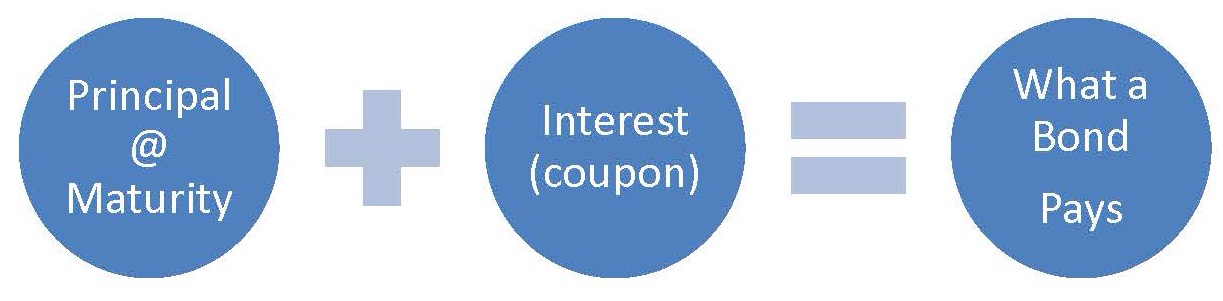
A BOND is a debt investment in which an investor loans a “fixed” amount of money for a “fixed” period of time at a “fixed” interest rate.  Stated another way, the indebted person (issuer) issues a bond that states the following two things:

  1. The interest rate (coupon) that will be paid, and
  2. When the loaned funds (bond principal) are to be returned (maturity date).

 photo 2

The best example of this is a student loan.

Example:

Sallie Mae loans Dave MBA $10,000.  Dave MBA does not have to pay the loan back for four years, but he must pay Sallie Mae 10% each year for the funds or $1,000 ($10,000 x 10%) per year.  Sallie Mae likes to receive those payments every six months, so Dave MBA pays Sallie Mae $500 every six months.

To illustrate:

Year 1

1/1/X1 – Dave MBA gets $10,000 from Sallie Mae

6/30/X1 – Dave MBA pays Sallie Mae $500

12/31/X1 – Dave MBA pays Sallie Mae $500

Year 2

6/30/X2 – Dave MBA pays Sallie Mae $500

12/31/X2 – Dave MBA pays Sallie Mae $500

Year 3

6/30/X3 – Dave MBA pays Sallie Mae $500

12/31/X3 – Dave MBA pays Sallie Mae $500

Year 4

6/30/X4 – Dave MBA pays Sallie Mae $500

12/31/X4 – Dave MBA pays Sallie Mae $500 plus gives back the $10,000

Sallie Mae made $4,000 (or 40%) on the $10,000 that it loaned to Dave MBA – Kaboom!

Sure, I tainted it for illustration purposes, because who would borrow money at 10% when interest rates are historically low?  In my example, we would rush to loan the money to Dave MBA if we knew that we would get a definite 10% return.  However, that is not always the case for most bonds.  The chart below shows the interest rates on some US Treasury and Corporate bonds.

U.S. Treasury Yields


Maturity

Last
Yield

Previous
Yield

3 Month 0.06% 0.07%
2 Year –%
5 Year 1.48% 1.46%
10 Year 2.68% 2.68%
30 Year 3.66% 3.66%


Corporates

Index Name

Last
Yield

Previous
Yield

Investment Grade 3.08% 3.12%
High Yield 5.59% 5.65%

Of course, risk is not completely diminished and remains a factor because not all bonds are equal.  The safest bond is the Treasury bond, which is issued by the US Government.  Because the government can effectively print money, these investments are safe and possess no risk at all.  As a result, the return on the investment is extremely low.  In essence, you give up a potentially higher return for safety.  Conversely, the riskiest bond is a corporate bond because your return is tied to the health of that entity.  Because it is riskier, the coupon or interest rate that they would need to offer you to invest your money with them would naturally be higher.

Over the next few days, we will delve into the different types of bonds available to investors.

Resources: 

CNN Money (http://money.cnn.com/data/bonds/) – CNNMoney.com is a business website. The site is the online home of Fortune and Money.

Important terms from this lesson:

Term

Definition

Bond It is a debt security, under which the issuer owes the holders a debt and, depending on the terms of the bond, is obliged to pay them interest (the coupon) and/or to repay the principal at a later date, termed the maturity date
Coupon Interest rate on bond.
Maturity Date Due date of the bond. When the bond principal must be repaid.
Bond Prinicpal The original amount loaned.

 Action Step:       Name the Bond components.

Go back to the example above and identify the following:

1.       Who is the issuer of the bond?

2.       Who is the borrower?

3.       What is the coupon rate of the bond?

4.       What is the bond period?

Lesson #20 – The Week’s Recap!

We are still in Step One or Phase One of the building wealth continuum – Creating/Developing Assets. We will continue discussing other aspects of this phase in the week to come, but for now, let’s recap what we learned this week.

Education:

Monday, February 3, 2014

Lesson #14 – Building wealth – Step 1: Create/Develop Assets – Investing 101

Tuesday, February 4, 2014

Lesson #15 – Building wealth – Step 1: Create/Develop Assets – Investing 101 – Diversification

Wednesday, February 5, 2014

Lesson #16 – Building wealth – Step 1: Create/Develop Assets – Investing 101 – How investing can make you wealthy?

Thursday, February 6, 2014

Lesson #17 – Building wealth – Step 1: Create/Develop Assets – Investing 101 – SLOWvesting – Tortoise-Style

Friday, February 7, 2014

Lesson #18 – Building wealth – Step 1: Create/Develop Assets – Investing 101 – Building an investment team

Saturday, February 8, 2014

Lesson #19 – Encouragement Saturday!


Lesson #19 – Encouragement Saturday!

Each Saturday, I will find ways to encourage you to reach your goals.  Whether it’s a video, an inspirational message, a poem, or whatever…I will post these items to keep you focused on achieving your financial goals.  Remember that you are the sun and you will provide the light for the people around you to believe.  By embarking on this journey, you have already proven that you are a standout in the crowd, a leader.  You have shown the desire and willingness to improve your life by implementing new strategies and lessons.  I strongly believe that you will be the catalyst for a seismic shift in your family.

Today, our encouragement comes from Tony Robbins – 5 Ways To Wealth and Happiness.

Have a beautiful Saturday!

Action Step:  Be encouraged and do not forget to pay yourself today for the 52-week challenge!

Lesson #18 – Building wealth – Step 1: Create/Develop Assets – Investing 101 – Building an investment team.

“Team work makes the dream work.”  What the Justice League can teach you about investing.

 huge-justice-league-superhero-movie-may-be-coming-in-2017

I grew up on cartoons, so it will come as no surprise that the Justice League was my favorite cast of characters growing up.  I spent countless days of my youth watching Superman, Batman, and Wonder Woman.  As an adult, I can see the valuable lessons that they taught me about teamwork.  Someone once told me that, “team work makes the dream work.”  I’m not sure where I heard this adage, but it stuck with me.  I am a TEAM player and I believe that the power of WE is preferable to one person going it alone.  Investing is no different.  You need a great TEAM!

Education:

Investing is not an easy exercise and although sites like E*Trade, Sharebuilder and Scottrade have sprung up over the past 20 years, investing is still an activity that is better done with a sound team.  Who’s on first?  Remember the skit from Abbott and Costello where Costello would become frustrated by Abbott’s response that Who was on First?  Well, investing is like a game, and you need to know WHO IS ON FIRST so this lesson is to help you build your investment team.

On any team, it functions best when you have the strongest players at each position.  In the game of investing, your players would be called financial advisors or financial planners.  A financial advisor is a person who provides financial advice or guidance to customers for compensation. Financial advisors can provide many different services, such as investment management, income tax preparation and estate planning. Think of them as the investment coach who teaches you the basics.

1.       Who are you investing for?

2.       What to invest in?

3.       When to invest?

4.       Where to invest?

5.       Why to invest?

Individually, each member of the Justice League was powerful.  However, as a TEAM, no opponent defeated them.  You need a strong team to help you create and accomplish your investment goals.  There is no shortage of financial advisors available to you.  Firms like Merrill Lynch, Morgan Stanley, Ameriprise Financial, Raymond James, Edward Jones and many more will help you be a better investor and reach your investment goals.  Don’t be intimidated by your perception of financial advisors.  Sure, some firms require that you have a large amount of money to invest before they will accept you as a client.  However, there are firms like Edward Jones that accept clients with as little as $100 to open an account.

Other types of financial advisors include Registered Financial Advisor, Chartered Financial Consultant (ChFC), Certified Financial Planners (CFP) and Personal Financial Specialist (PFS).

Don’t go it alone – get a strong TEAM!

 index


Resources: 

Financial Planning Association – Online community of financial planners.

Ameriprise Financial (www.amerirpise.com) –  financial advisory firm that offers financial planning advice and retirement investment advice.

Edward Jones (www.edwardjones.com) – financial advisors that offer a personal approach to investing and retirement planning to help you reach your long-term financial goals.

Important terms from this lesson:

Term

Definition

Financial Advisor One who provides financial advice or guidance to customers for compensation.  Financial advisors can provide many different services, such as investment management, income tax preparation and estate planning.
Registered Financial Advisor Investment advisor that receive compensation for giving advice on investing in securities such as stocks, bonds, mutual funds, or exchange traded funds.
Chartered Financial Consultant (ChFC) Chartered Financial Consultant designations are granted by The American College upon completion of seven required courses and two elective courses. Those who earn the designation are understood to be knowledgeable in financial matters and to have the ability to provide sound advice.
Certified Financial Planner (CFP) The Certified Financial Planner (CFP) designation is a professional certification for financial planner conferred by the Certified Financial Planner Board of Standard (CFP Board). CFPs have met the education, examination, experience and ethics requirement to be certified.
Personal Financial Specialist (PFS) A specialty credential awarded by the American Institute of Certified Public Accountants (AICPA) to CPAs who specialize in helping individuals plan all aspects of their wealth.

 Action Step:        Find a financial advisor!

Click the link to read the white paper, Selecting a Financial Advisor

Lesson #17 – Building wealth – Step 1: Create/Develop Assets – Investing 101 – SLOWvesting Tortoise-Style

2

There is an old folk tale about the Tortoise and the Hare.  “The story concerns a Hare who ridicules a slow-moving Tortoise and is challenged by the tortoise to a race. The hare soon leaves the tortoise behind and, confident of winning, takes a nap midway through the course. When the Hare awakes however, he finds that his competitor, crawling slowly but steadily, has arrived before him. (Wikipedia)”

You may wonder how the tortoise managed to win, but in winning, the tortoise teaches an extremely valuable lesson that can be applied to investing.   Although slow moving, the tortoise won the race because he relied on persistent, stead, continuous, committed action to reach his goal.  This piece of folklore is a great way to motivate new investors, like YOU, to stay the course.  Investing is not a sprint, it’s a marathon.

Education:

In investing, you will encounter and may even be intimidated by many Hare-type people.  I define these individuals as investment savvy, affluent, well connected, well informed, and so forth.  Sure, they may have more money than you, they may have been taught the principles of investing before you and they may already be wealthy, but that does not mean that you cannot win the race of investing.  Many Hares will burn out, they win gamble big and lose because slow-moving activities are boring to them.  They thrive off of excitement.  This is where YOU, the tortoise, can WIN!

There are two methods of investing that involve slow and stead action – Dollar Cost Averaging and Dividend Reinvestment.

Dollar Cost Averaging (DCA)

The Dollar Cost Averaging method is investing a small amount of money regularly over a period of time.  For example, if you invest $100 every month from your paycheck, eventually that pool will grow into a large pool of resources.  This strategy is the best method for new investors.  Don’t believe that you have to move quickly like the Hare, be the proud tortoise because you can still win using this strategy.  Sure, it will take you longer, but remember that this is not a race.

Dividend Reinvestment Plan (DRIP)

The Dividend Reinvestment Plan method enables you to build up the number of shares over an extended period of time.  In Lesson #15, we discussed dividends and picking stocks that pay dividends.   I also told you that dividends were paid in two ways, via cash or stock.  Instead of receiving cash outright, some companies allow you to use your dividends to purchase more shares in their company. That’s dividends on dividends.  For example, if you are in a DRIP, when a corporation pays its dividend to you, instead of them giving you cash, they will use that money to buy additional shares.  Let’s look at an example.

“Let’s say that Mary Johnson owns 1,000 shares of Pepsi. The stock currently trades at $50 per share and the annual dividend is $0.88 per share. The quarterly dividend has just been paid ($0.88 divided by 4 times a year = $0.22 per share quarterly dividend). Before she enrolled in Pepsi’s dividend reinvestment plan, Mary would normally receive a cash deposit of $220 in her brokerage account. This quarter, however, she logs into her brokerage account and finds she now has 1,004.40 shares of Pepsi. The $220 dividend that was normally paid to her was reinvested in whole and fractional shares of the company at $50 per share. (Dividend.com)”

This strategy may not be as sexy as cashing a check, but your stock portfolio can go from nothing to something over time.  This is another method of SLOWvesting!

 index

Be a proud Tortoise!  You can do it…you can WIN!

Resources: 

Dividend.com – Internet source for dividend investing.

The Motley Fool  (www.fool.com) – The Motley Fool is a multimedia financial-services company dedicated to building the world’s greatest investment community.

 Important terms from this lesson:

Term

Definition

Dollar Cost Averaging   The technique of buying a fixed dollar amount of a particular investment on a regular schedule, regardless of the share price. More shares are purchased when prices are low, and fewer shares are bought when prices are high.
Dividend Reinvestment Plan (DRIP) A plan offered by a corporation that allows investors to reinvest their cash dividends by purchasing additional shares or fractional shares on the dividend payment date.

 Action Step:        Watch and Read!

  1. Go to http://bit.ly/1cZZmKw and enter your email address to receive a free report entitled, Secure Your Future With 9 Rock-Solid Dividend Stocks.  Use the report to learn some strategies about how to pick dividend paying stocks.
  2. Click to watch the video, What is a Dividend?

Lesson #16 – Building wealth – Step 1: Create/Develop Assets – Investing 101 – How investing can make you wealthy?

Do you want Mo’ Money…Mo’ Money…Mo’ Money?

MV5BMTUzMTAyODA2NV5BMl5BanBnXkFtZTYwNzA1Njk4._V1_SY317_CR2,0,214,317_

I may be dating myself a bit, but in the 90s, there was this quirky movie starring Marlon and Damon Wayans called Mo’ Money.  The gist of the movie was that the Wayans brothers were always looking for gimmicks to make money.  Whether it was Three-card Monte or using the laws of misdirection, they were constantly on the move to swindle someone in search of Mo’ Money…Mo’ Money…Mo’ Money.  Well, if I could jump in the time machine and speak to the brothers, I would say drop the hustle and start investing. Let’s explore why investing is one of the greatest hustles on earth.

Education:

The last two lessons were used to set the foundation by establishing some key principles in the world of investing – Risk vs. Reward and Diversification.  Now that we have spent some time flushing out those concepts, let’s get to the money making.  How do you make money investing? Why…I’m glad you asked?  The answer is x + y = z.    Remember that formula from pre-algebra?  Let’s see how we can use this formula to make Mo’ Money.

X + Y = Z

One way to make money is to create MSIs or Multiple Streams of income.  In Lesson #14, I told you that there are two ways to make money (z) through investing – stock appreciation (x) and dividends (y).   To illustrate, let’s look at the following diagram.

 photo

 X

The table below illustrates stock appreciation, based on the IPO or Initial Public Offering price per share of some of the most expensive stocks available.

Stock

IPO Price/Share

Today’s Closing Price/Share

Appreciation

Google $                    85 $                 1,143.20 $             1,058.20
Apple $                    22 $                    512.59 $                490.59
Face book $                    38 $                      62.19 $                  24.19
Chipotle $                    22 $                    542.43 $                520.43
Netflix $                    15 $                    404.42 $               389.42
Berkshire Hathaway A $                  1138 $            164,075.09 $        164,063.72

Y

When you buy stock in a corporation, you invest in that corporation.  The stock or common stock or equity as it is known, is a security that represents ownership in a corporation…you are an OWNER! A share of common stock entitles the holder (OWNER) to receive dividends that may or not be paid, depending on the fortunes of the company.  Say you invest $10 and receive 10 shares in ABC, Inc.  That translates into $1/share. The company has a great year and indicates that it wants to share its great fortune with the owners of the corporation (its stockholders…YOU).  ABC Inc. announces that it will give each stockholder a $1 dividend for each share held.  Wow…what did you say?  As my Pastor would say, rewind and press play.

Let’s break this down.

A – You own 10 shares

B – You will receive $1 for each share that you own

C – You still own your 10 shares and now you have a $10 cash dividend.  Kaboom!

The only problem is that not all companies pay dividends, so a great investment strategy is to invest in a company that does….it’s that simple.  Dividends can come in two forms – cash and stock (see definitions below).

Resources: 

Yahoo Finance – Yahoo! Finance is a web site sponsored by Yahoo! that provides financial information and commentary with a focus on US markets.

Important terms from this lesson:

Term

Definition

Stock or Common Stock  or Equity Security that represents ownership in a corporation.
Stockholder The owner the stock.
Initial Public Offering Price The price of the first sale of stock by a private company to the public
Cash Dividend A cash payment made to shareholders of the corporation.
Stock Dividend Additional shares given to shareholders of a corporation. No cash received.

 Action Step:       Calculate Mo’ Money – test the x + y = z

  • Find the X – What is the stock appreciation on 100 shares of Google stock purchased at the IPO price?
  • Find the Y –Google announced that it would pay a $10 cash dividend to stockholders for each share held.  How much will you receive?
  • What is Z – your Mo’ Money?

What is X

What is Y

What is Z (your Mo’ Money)


Lesson #15 – Building wealth – Step 1: Create/Develop Assets – Investing 101 – Diversification

Tags

, , ,

Did anyone ever tell you not put all of your eggs in one basket?

 index

Putting all of your eggs in one basket, puts all of the eggs at risk.  But, placing a few of the eggs in another basket automatically reduces the risk that you will lose all of your eggs.  The strategy of spreading the eggs to multiple baskets is called DIVERSIFICATION.  In this lesson, we will discuss this important concept as a cornerstone to investing.

Education:

The theory of diversification rests in the simple thought that as some items lose value, other items gain in value.  The market is volatile and can change on a dime.  Just think back to economic crash of 2008. Bad news from one sector of the economy, one foreign country, or almost anything can cause the market to react negativity. This inherent volatility is why you have to hedge against sudden downturns by investing in a variety of investments in your portfolio.

When I began my graduate program in 2003, one of the first classes that I took was Personal Financial Planning.  In that class, I learned that DIVERSIFICATION REDUCES RISK.  Unbelievably, this idiom has stuck with me and I will never forget the truth in those three words.

Idiom #1 – Diversification reduces risk

Applying this theory to the grid from Lesson #14, indicates that we should spread our eggs (dollars) to various classes of investments to mitigate the risk of losing all of our eggs (dollars).  Moreover, it suggests that even if you favor one investment class – say stocks – then surely you would not invest all of your money in one stock.  If you say, yes I would, then let us revisit the Enron case.

photo

“On Dec. 2, 2001, Enron filed for bankruptcy protection in the biggest case of bankruptcy in the United States up to that point. Roughly 5,600 Enron employees subsequently lost their jobs.” (CNBC News)

This real tragedy is that of those 5,600 Enron employees, many lost everything because they failed to diversify.  Let us look at what they did wrong.

  1. They worked for Enron – their salary income was tied into Enron.
  2. They invested in Enron – their discretionary and retirement money was tied into Enron.

This is clearly a case where all of their eggs were in the same basket.  It is quite evident that they bet the house on Enron’s success and the house lost.  Enron’s demise took them down financially because all of their finances were tied into this one company.  Had they simply remembered Idiom #1 – Diversification reduces Risk, they would have made sure to invest in different stocks through their retirement plans.  Unfortunately, it is a cruel lesson that came at a very expensive price.  In the next lesson, we will examine Idiom #2 – Multiple Streams of Income and how that could have helped many of Enron’s employees.

Resources: 

Suzy Orman  – Personal Finance Guru – A two-time Emmy Award-winning television host, New York Times mega bestselling author, magazine and online columnist, writer/producer, and one of the top motivational speakers in the world today, Orman is undeniably America’s most recognized expert on personal finance.

Important terms from this lesson:

Term

Definition

Diversification A risk management technique that reduces risk by investing in a variety of investments within a portfolio.
Volatility Refers to the amount of uncertainty or risk.
  Hedge To mitigate risk.
  Portfolio Your basket of eggs or investments.

 Action Step:       Which of the following illustrates diversification?

List five of your favorite stocks or corporations.  Answer the three questions:

1.       Are the companies in the same industry?            Yes   or    No

2.       Are the companies in the same region?               Yes   or   No

3.       Are the companies the same size?                       Yes   or    No

If you answered yes to any of the three questions, then your favorite stocks may not achieve diversification.

Lesson #14 – Building wealth – Step 1: Create/Develop Assets – Investing 101 – The Basics

Tags

, , ,

“It is not, Lord send me the money. It’s Lord, aim me at the fish.” – TD Jakes

deep sea

Investing is like deep sea fishing.  If done properly, one small bait can catch an enormous fish.  However alike, deep sea fishing and investing are not for the faint of heart. These activities are reserved for the thrill seekers who are willing to put in on the line for a chance to catch the big fish.  Are you a thrill seeker?

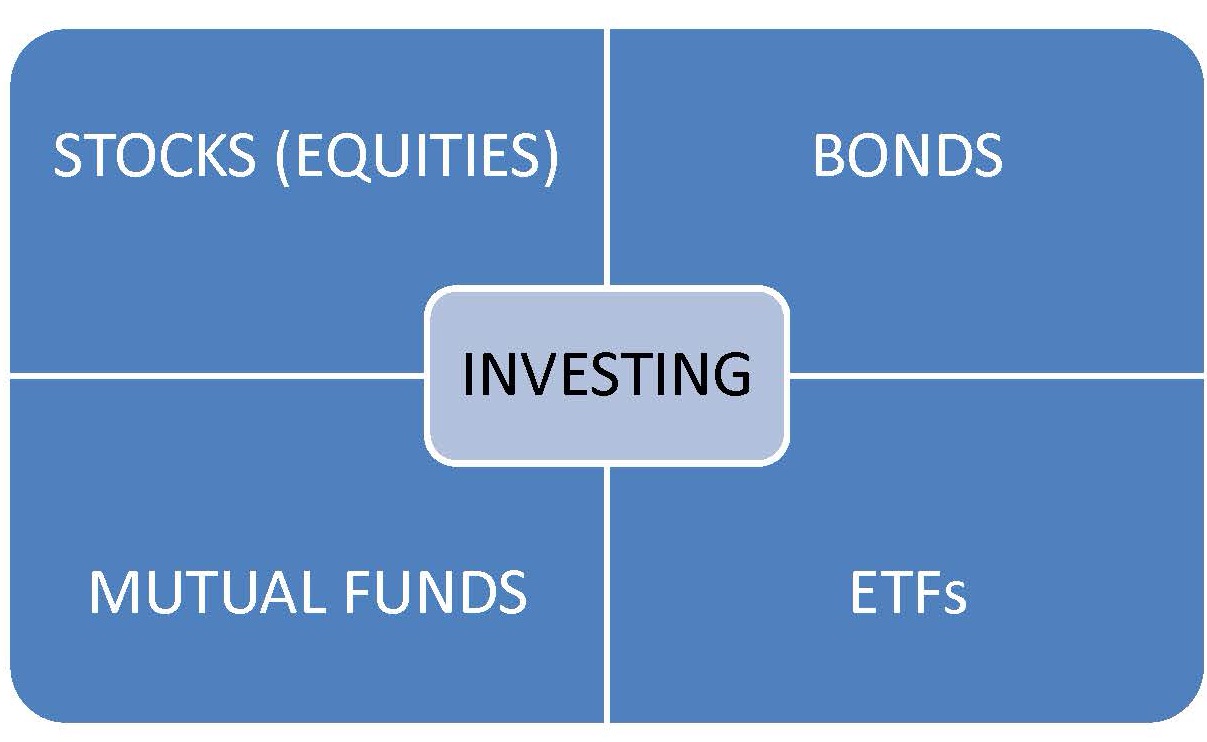
Any time you take a risk to gamble on catching a big, bigger or the biggest fish, it is called investing.  With such a broad application, we are going to narrow our efforts to the four basic categories of capital investing for wealth building purposes.

 photo

Education:

In Lesson #8, Exploring Savings Alternatives, I told you that investing is NOT a savings alternative.  However, I did not say that it was not a critical element in the wealth building process.  The upside is that investing the RIGHT way can make you wealthy, rich, a tycoon, a millionaire, and a billionaire.  However, the downside is that…

  1. Investing is RISKY!
  2. Investing can cause you to lose your money!
  3. Investing is a gamble!
  4. Investing is a speculative activity!
  5. Investing claims winners and losers everyday!

Now that we have discussed some of the negative aspects of investing, why would people partake in this risky activity?  Because, investing can lead to a HUGE reward!

 index

This phenomenon is what we call the Risk vs. Reward Principle.  Think of investing as gambling the house.  If you are lucky, then you can make a lot of money.  However, if you gamble wrong, then you can lose everything including the money that you put in.

Since we know that investing involves a measure of RISK.  Your relationship to risk, is called your RISK TOLERANCE.  People who like to gamble in favor of a high return or reward are called, RISK SEEKERS.  While people who are not willing to make this gamble are called, RISK ADVERSE.  Which are you?

In capital investing, there are two ways to make money – capital gain (appreciation) and dividend income (to be discussed in the next lesson).

To illustrate the principle of ‘capital appreciation’, let us take a look at Google.  When Google offered its stock for the first time, it sold for $85 per share.  This past Friday, that same stock sold for $1,136.19 per share.  That means that if you purchased one share in 2004 and sold it on Friday, you would have made $1,051.19.  Now, what if you would have purchased 10 shares?  You would have made $10,511.90 ($1,051.19 x 10). I love math, but it does not take a genius to see that this strategy can make your wealthy.    Your $85 capital appreciated to $1,051.19.  Kaboom!!!

We will continue this discussion in Lesson #15.

Resources: 

Jim Cramer (Mad Money, CNBC) – A nightly television show that teaches the principles of stock investing. Airs nightly at 7p and 11p on CNBC.

Important terms from this lesson:

Term

Definition

Risk The chance that an investment may not pay off or the actual return is different than expected.
Risk vs. Reward or Risk vs. Return The principle that a potential return rises with an increase in risk.
Risk Seeker The search for greater volatility and uncertainty in investments in exchange for anticipated higher returns.
Risk Adverse Unwillingness to take on additional risk even for a higher return.
Capital Capital is more durable and is used to generate wealth through investment.
Capital Gain (Appreciation) A rise in the value of an asset based on a rise in market price.

 Action Step:       What is you risk tolerance? Are you a RISK SEEKER or are you RISK ADVERSE?

Go to http://www.kmsykescpa.com/calc-section.php?calc=inv08 and answer the 10 questions to determine your risk tolerance level.