• About

Education and Action

~ Improving Financial Literacy and Teaching Wealth Building Principles

Education and Action

Category Archives: Kids’ Money

Lesson #83 – Financial Freedom Friday for Kids

02 Friday May 2014

Posted by kenyasykes in Kids' Money

≈ Leave a comment

Hey kid, it’s time to become a teenvestor!

If you are a parent who is looking for information about how to get your child interested in investing and entrepreneurship, then I have found a great website for you, Teenvestor.com (www.teenvestor.com) — the most comprehensive website for young investors.

About Teenvestor

The goals of this website are to:

  • Teach young people how to become life-long investors;
  • Expose teens to entrepreneurship;
  • Help parents encourage their children to become investors and entrepreneurs;
  • Help teachers expose their students to basic economic and business concepts.

Emmanuel Modu and Andrea Walker, the creators of this site, are the authors of three books about Teenvestors:

1. Mad Cash: A First Timer’s Guide to Investing $30 to $3,000 (Penguin/Perigee 2003)

2. TeenVestor: The Practical Investment Guide for Teens and Their Parents (Penguin/Perigee 2002)

3. The Lemonade Stand: A Guide To Encouraging The Entrepreneur In Your Child (Gateway Publishers 1992)

The creators have spent the past 12 years writing about young people in business and teaching young people about investing and entrepreneurship.  Do your child a favor and encourage them to read these books.  In fact, read them for yourselves and teach these principles to your children.

For more information, please visit http://www.teenvestor.com.


Lesson #74 – Financial Freedom Friday for Kids

04 Friday Apr 2014

Posted by kenyasykes in Kids' Money

≈ Leave a comment

Hey kid, make your own destiny!

1396289235000-Kwasi-Enin-William-Floyd-High-School-2jpg

(Photo Credit: ABC)

I couldn’t end the week without paying homage to a remarkable young man who just made his own bit of history. By now, everyone has heard of Mr. Kwasi Enin, a 17-year-old, first-generation American who applied and was accepted to all eight Ivy League Universities. This young man brought hope to the masses this week and he proved that in this country, the sky is the limit as long as you are willing to work hard. Now, I could use this entire blog post to just brag and celebrate Kwasi, but I want to use his story to fuel other young people in the effort to use his example to pave your way to financial freedom. You knew that I would bring it back to the dollars and cents, didn’t you? Well, that is exactly what we will do in today’s lesson.

Education:

“The Mind is a Terrible Thing to Waste” – UNCF

Everyone know the tagline for the United Negro College Fund (UNCF). In an interview with the CBS Morning Show, Kwasi’s father spoke of his child as being a regular kid with no extraordinary ability. As a first-generation American, his parents came to this country to give their children a better opportunity, a chance to achieve the American dream. They realized that in America using your mind can be the key to a future of financial freedom. We want to teach this example to other kids.

Kwasi’s parents realized that education would be the key to unlock a fruitful future for their children. With that said, they set a high expectation that anything less than 95% was not good enough and their two kids bought into their philosophy. Academic achievement is the key.

index

So kids…take a page from Kwasi and write your own check to a successful future. Not only does Kwasi has his choice among the eight elite universities, his education will most likely be subsidized by the university that he chooses. That means a FREE education, which will save his parents money now and prevent him from taking on excessive student loans…that’s what I call a win-win situation.

So my advice to kids is to STUDY HARD and do not take your education for granted because it can be your ticket to the life that you want. Hey kid…it’s time to punch your ticket!

index2

Resources:

  • The Princetown Review (http://in.princetonreview.com/) – Your guide to college admissions.
Term Definition
Ivy League A group of long-established colleges and universities in the eastern US having high academic and social prestige. It includes Harvard, Yale, Princeton, Columbia, Dartmouth, Cornell, Brown, and the University of Pennsylvania.


Action Step:       Watch Kwasi and be inspired!

How Kwasi Enin Did It!

Lesson #67 – Financial Freedom Friday for Kids

28 Friday Mar 2014

Posted by kenyasykes in Kids' Money

≈ Leave a comment

Are you teaching your kids to spend smart?

Kids-page-banks


The best way to learn a skill is to practice!

Education:

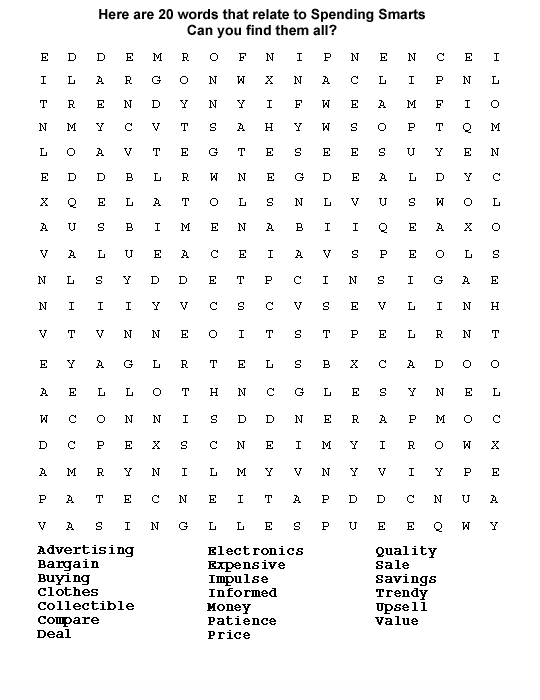
Watch out parents – your kid is watching you! With that piece of information, you should realize that kids mimic the behavior of their parents. Frugal parents raise frugal children. Extravagant parents raise extravagant children. Pensive parents raise pensive children. I think you get the picture. What that teaches is that kids will learn to save or spend based on the example that you provide for them. Today’s lesson is to give you a fun tool to help teach your child about smart spending habits.

word_search_spendingsmarts

Spending Smarts Word Search

Resources: 

• PBSkids.org (http://pbskids.org/itsmylife/money) – financial resources for kids.

Important terms from this lesson:

Term

Definition

FUN No definition needed!

 Action Step:       Print and complete the Spending Smarts Word Search with your child. Split up the words between you and your child. Once completed, ask your child to explain their understanding of the words that they were given.

Spending Smarts Word Search


Lesson #60 – Financial Freedom Friday for Kids

21 Friday Mar 2014

Posted by kenyasykes in Kids' Money

≈ Leave a comment

Hey kid!  Do you want money? Get a job.

7 Ways Kids Can Earn Money

family-dishes

The best way to learn a skill is to practice!

Education:

Sometimes, the things you want cost more money than you have. What do you do? You can either save up by not spending on other items, or you can try to earn some extra money.

With a little work, a little creativity and an okay from your parents, you can start adding to your piggy bank.. Here are a few ideas to get you started:

  1. Help out more at home.
    Ask your parents if you can help with any big projects around the house: cleaning or organizing the garage, basement, or attic. Or you can help tidy closets, straighten up the laundry area. You can think of more.
  2. Help people take care of their yards.
    Tell your neighbors that you would like to be their helping hand. Offer to help with grass-cutting, snow shoveling or leaf-raking. You can pull weeds, water lawns, or pick up branches during spring clean-up. Make flyers and drop them off at houses in your neighborhood.
  3. Wash cars.
    Turn your driveway into a neighborhood car wash.
  4. Babysit little kids.
    Once you’re legally old enough, take a babysitting class. Local hospitals usually offer these classes. Parents are always looking for a good sitter.
  5. Start a dog-walking service.
    Feed, watch or walk dogs. If you’re really responsible, you might offer to care for other people’s pets — like lizards and birds —while they’re busy or away from home.
  6. Sell unwanted items.
    Set up a “rummage sale.” Some parks and schools hold big rummage sales. You could be a part of them. Some stores sell “used” toys and clothes. Ask your parents about this idea. They can help you find a store in your neighborhood.
  7. Sell candy or bakery.
    Bake some cookies and brownies and sell them at events.

(Source: Themint.org)

earning-girl-wash

Resources: 

Themint.org – the site provides tools to help parents as well as educators teach children to manage money wisely and develop good financial habits: the building blocks for a secure future.

Important term!s from this lesson:

Term

Definition

FUN No definition needed!


Action Step:       Help your child earn some extra cash for spring break!

Take the Be Your Boss Challenge (from TheMint.com) – click below to begin:

Take the Be Your Own Boss Challenge

Lesson # 53 – Financial Freedom Friday for Kids

14 Friday Mar 2014

Posted by kenyasykes in Kids' Money

≈ Leave a comment

Let’s Play Financial Soccer
Is your financial knowledge ready for a workout?

fifa14_banner

Word hard, play hard!

Education:

Today’s lesson will test your knowledge of financial information.   You have worked hard all week with demanding lessons, so it is time to unwind.  Financial Soccer is part of Practical Money Skills for Life (www.practicalmoneyskills.com) a free, award-winning financial education program that reaches millions of people around the world each year.

Video intro for Financial Soccer

Resources: 

Practicemoneyskills.com – A website to help consumers and students of all ages learn the essentials of personal finance.

Important terms from this lesson:

Term

Definition

FUN No definition needed!

 Action Step:       Download and play the Financial Soccer game.

Today is about having fun, so grab the kids and play Financial Soccer. 

Available online at http://www.financialsoccer.com/play puts students’ fiscal knowledge to the test in an online simulation game environment by combining the structure and rules of the MLS with financial education questions of varying difficulty.

Lesson #46 – – Financial Freedom Friday for Kids

07 Friday Mar 2014

Posted by kenyasykes in Kids' Money

≈ Leave a comment

Budgeting  101 for Kids!

photo

Let’s face it, kids love to spend money!  The problem is that there is disconnect in the minds of children between the efforts it takes to earn money and the ease of hand to spend it.  That divide can be fixed if we take the time to teach kids about the value of budgeting. 

Education:

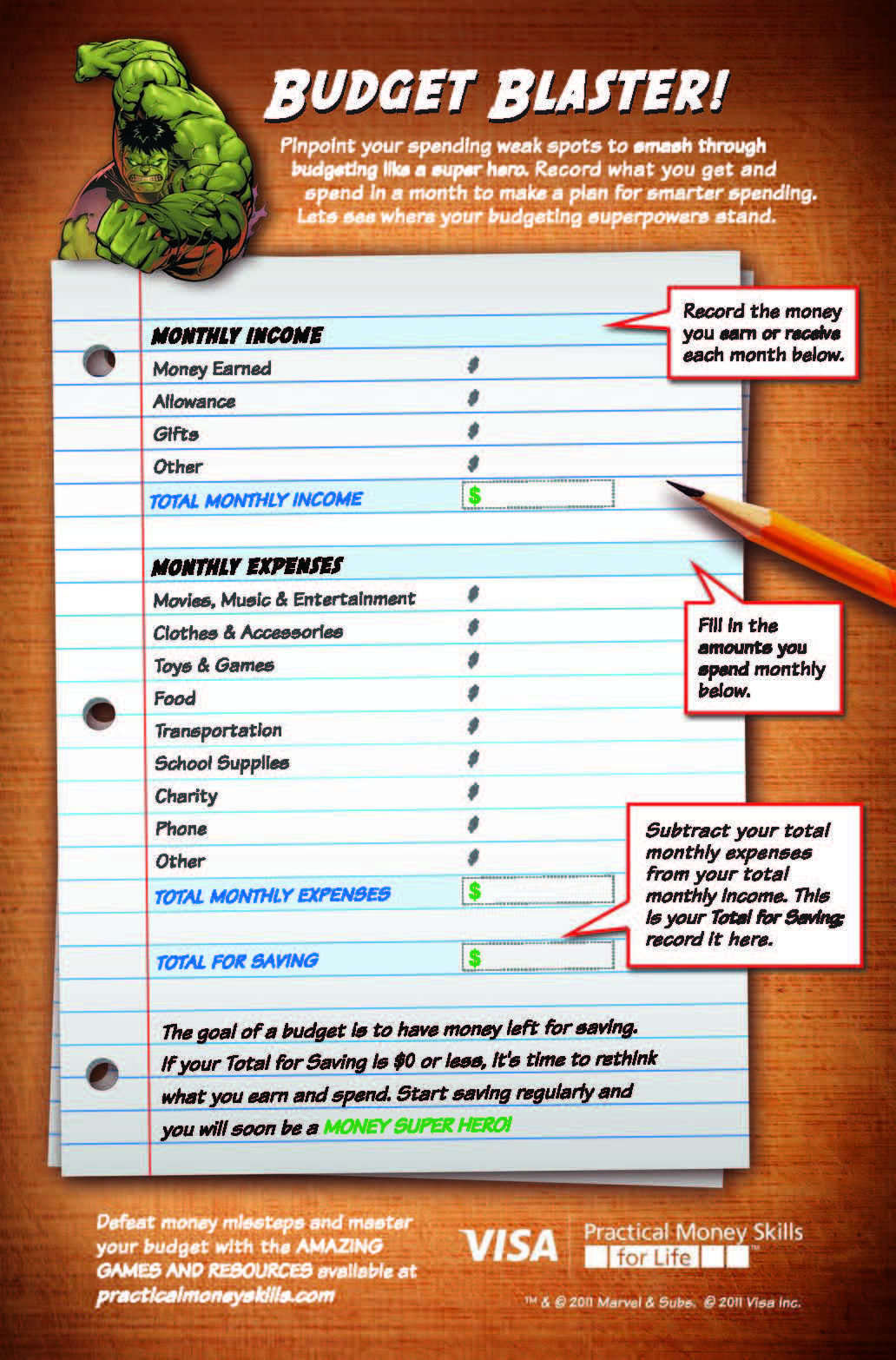
Today’s lesson is to teach kids about the value of Budgeting using Practical Money Skills’ Marvel Budget Blaster.  It’s important for kids to understand that unless you are Warren Buffet, money is a finite resource that must be used wisely.  This week they want the new Xbox, next week they want the new Air Jordans, and so on.  The problem is that parents have failed to paint the yellow brick road for them. The yellow brick road conjures up the journey that Dorothy took in the Wizard of Oz. In reality, parents travel that yellow brick road everyday and it’s called their JOB.  Kids don’t often see the work involved with to earn the money, so they don’t see it as a limited resource.  In the last few decades, we have moved from a cash society to a credit/debit card society.  Though that transition has made it more convenient for parents to consume and do personal banking, kids see the card as an unlimited source of money to make them happy.  Today, we will shatter their little perception and teach them how to prioritize the things they want with the money that they have.  Kids must learn the difference between two very important terms, disposable income and discretionary income.

Discretionary income – The amount of an individual’s income that is left for spending, investing or saving after taxes and personal necessities (such as food, shelter, and clothing) have been paid. Discretionary income includes money spent on luxury items, vacations and non-essential goods and services.

Disposal income –The amount of personal income an individual has after taxes and government fees, which can be spent on necessities, or non-essentials, or be saved.

Marvel Budget Worksheet


Resources:

Marvel Budget Worksheet and Resources – See Action Step below.

Important terms from this lesson:

Term

Definition

Budget An estimate of income and expenses.


Action Step:  Introduce the Marvel Budget Worksheet to your kids

  1. Click the link to download the Marvel Budget Blaster.
  2. Sit down and talk to you kids about budgeting and help them to complete the form for the month of March.
  3. If you need a little assistance, watch the video with your child – How To Build A Budget

Lesson #39 – Financial Freedom Friday for Kids

28 Friday Feb 2014

Posted by kenyasykes in Kids' Money

≈ Leave a comment

“Train up a child in the way he should go, And when he is old he will not depart from it. “ – Proverbs 22:6

index

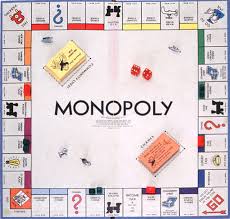
It is no coincidence that I grew up to become a Certified Public Accountant because my fascination with money began at a very young age. When I was a kid, one of the things that my family would do is play board games.  One of my favorite board games was Monopoly, the quintessential game about MONEY.  I’m sure that Charles Darrow, the creator of Monopoly, never envisioned how vital his board game would be to teaching the value of a dollar to the youth of America and ultimately the world.  I can proudly say that I still own this board game and it continues to excite me to play it with friends.

Education:

 images

Today’s lesson will focus on Monopoly.   Through the use of Monopoly money, the game teaches the value of a dollar and its PURCHASING POWER.    In addition, the game teaches about life through various aspects of society and wealth, including:

  1. The Bank (teaches the central purpose of the banking system, to lend and exchange money)
  2. The Banker (the individuals who make money decisions that affect your life)
  3. Chance (many things in life as a result of chance)
  4. Community Chest (the importance of the community to your success)
  5. Jail (the consequences of making bad moves and decisions in life)
  6. Properties (how ownership creates wealth)
  7. Mortgaging (the cost of property ownership – evaluating mortgage options)
  8. Bankruptcy (the consequences of poor financial management)
  9. Utilities (municipal obligations)
  10. Infrastructure (real estate and railroads)

Later versions of the game teach about banking, the stock market, currencies, international markets, etc.  As our financial world changes, the game evolves to teach the new batch of kids about the world.  Never underestimate the value of games to teach critical lessons about life.

Resources:

Hasbro (maker of Monopoly)    (http://www.hasbro.com/monopoly/en_us/) – Visit the site to learn about the game.

Important terms from this lesson:

Term

Definition

Purchasing Power The financial ability to buy products and services.

Action Step:       Play the game

1.       Buy the Monopoly board game for a child in your and play it with them.

OR

2.       Play the online version for free (http://www.ea.com/1/monopoly)

Lesson #32 – Financial Literacy Friday for Kids

21 Friday Feb 2014

Posted by kenyasykes in Kids' Money

≈ Leave a comment

“I believe the children are our future. Teach them well and let them lead the way.” – Whitney Houston

index

If you remember, the idea of this blog was originally conceived when a child called into the Suzy Orman show.  If you don’t recall, then go back to my very first post and read where the inspiration originated.

I have been providing lessons to you each day in an effort to raise your level of financial literacy.  Yesterday, it dawned on me that these lessons are not isolated for adults, but are more effective when taught to children because as the song lyrics go, “they are the future, teach then well and let them lead the way.”  With that said, each Friday’s lesson from today forth will be to teach financial principles for kids.  However, I’m depending on you, parents, to share this information with them.  Make financial literacy a priority in your household.

Let’s begin from the beginning – teach your child how to save!

Education:

Let’s face it, kids like to spend money!  I don’t think there is a parent who would disagree with that sentiment.  The problem is that kids are taught to spend because they are constantly inundated with commercials and advertising campaigns designed to excite the dollars right out of their parent’s pockets and pocketbooks.  I don’t blame the kids, heck…they are just being kids…I blame YOU!  Yes, you the parents, because many of you have never taught them to SAVE –solvency through appreciating assets of value in my estate.

S       –        Solvency

A       –        Assets

V       –        Value

E       –        Estate

Teach you child that COINS are there friends!  If they learn to associate a simple coin with money in the bank, that association will help them to develop a lifestyle of saving!

What are you teaching your child or children about money?  Are you teaching them negative or positive aspects of money?  How are your reinforcing their understanding of money?  These are questions that you need to ask yourself.   If you don’t like the answer, then I challenge you to take advantage of Financial Literacy Friday for Kids!

Resources:

Kids’ Money (http://kidsmoney.org/) – Kids’ Money is an interactive resource for parents, teachers, teens, kids, organizations and international visitors designed to help children develop successful money management habits and become financially responsible adults.

Important terms from this lesson:

Term

Definition

Solvency In kids’ terms – Having more money and assets than debts!
Estate In kids’ terms – Everything that you own of value. 

 Action Step:        Make SAVING fun and for a purpose!  Here are your instructions.
imagesBuy your child or children a PIGGY BANK.  Yes, a piggy bank!

  1. Buy your child a calendar.

  2. Discuss what it means to SAVE with your child – Solvency through appreciating Assets of Value of my Estate.

  3. For 2014, circle one day in the calendar every month so that you have 11 days circled (sinced we are already in the month of February) – this is your official TAKE A KID TO THE BANK DAY.

  4. Find a bank like TD Bank with a penny arcade.

  5. Every month on TAKE A KID TO THE BANK DAY, have your child go to the penny arcade and deposit every coin that they found, earned, or raised during the month.  When you get your deposit receipt, use it to open up a SAVINGS (what else) account for your kid.

  6. Repeat this step every month.  Once received, go over the receipts with your child so that they can understand how money is saved.

If you have a teenager, then no worries.  Just skip the piggy bank portion, but follow everything else.  They need to know that one day of the month is set aside to SAVE!

Recent Posts

  • Never Stop Learning!
  • Lesson #83 – Financial Freedom Friday for Kids
  • Lesson #82 – Black CEO: Do More Than Save if You Want to Be Wealthy
  • Lesson #81 – Last-Minute Tax Tips to Maximize Your Savings (reposted from The Huffington Post)
  • Lesson #80 –Can Paying Your Taxes Late Affect Your Credit Score? (reposted from The Huffington Post)

Recent Comments

kenyasykes's avatarkenyasykes on Lesson #26 – Encouragement…
kenyasykes's avatarkenyasykes on Lesson #52 – The Flipside : 10…
Unknown's avatarLesson #52 – The Fli… on Lesson #52 – The Flipside : 10…
TheKnowledgeofWords's avatarcocolaelle on Lesson #26 – Encouragement…

Archives

  • September 2014
  • May 2014
  • April 2014
  • March 2014
  • February 2014
  • January 2014

Categories

  • Assets
  • Basic Personal Finance
  • Encouragement
  • Kids' Money
  • Uncategorized

Meta

  • Create account
  • Log in
  • Entries feed
  • Comments feed
  • WordPress.com

Enter your email address to follow this blog and receive notifications of new posts by email.

Join 22 other subscribers

Recent Posts

  • Never Stop Learning!
  • Lesson #83 – Financial Freedom Friday for Kids
  • Lesson #82 – Black CEO: Do More Than Save if You Want to Be Wealthy
  • Lesson #81 – Last-Minute Tax Tips to Maximize Your Savings (reposted from The Huffington Post)
  • Lesson #80 –Can Paying Your Taxes Late Affect Your Credit Score? (reposted from The Huffington Post)

Recent Comments

kenyasykes's avatarkenyasykes on Lesson #26 – Encouragement…
kenyasykes's avatarkenyasykes on Lesson #52 – The Flipside : 10…
Unknown's avatarLesson #52 – The Fli… on Lesson #52 – The Flipside : 10…
TheKnowledgeofWords's avatarcocolaelle on Lesson #26 – Encouragement…

Archives

  • September 2014
  • May 2014
  • April 2014
  • March 2014
  • February 2014
  • January 2014

Categories

  • Assets
  • Basic Personal Finance
  • Encouragement
  • Kids' Money
  • Uncategorized

Meta

  • Create account
  • Log in
  • Entries feed
  • Comments feed
  • WordPress.com

Facebook

Facebook

Blog at WordPress.com.

Privacy & Cookies: This site uses cookies. By continuing to use this website, you agree to their use.
To find out more, including how to control cookies, see here: Cookie Policy
  • Subscribe Subscribed
    • Education and Action
    • Already have a WordPress.com account? Log in now.
    • Education and Action
    • Subscribe Subscribed
    • Sign up
    • Log in
    • Report this content
    • View site in Reader
    • Manage subscriptions
    • Collapse this bar
 

Loading Comments...