• About

Education and Action

~ Improving Financial Literacy and Teaching Wealth Building Principles

Education and Action

Category Archives: Basic Personal Finance

Lesson #17 – Building wealth – Step 1: Create/Develop Assets – Investing 101 – SLOWvesting Tortoise-Style

06 Thursday Feb 2014

Posted by kenyasykes in Basic Personal Finance

≈ Leave a comment

2

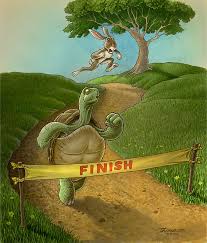
There is an old folk tale about the Tortoise and the Hare.  “The story concerns a Hare who ridicules a slow-moving Tortoise and is challenged by the tortoise to a race. The hare soon leaves the tortoise behind and, confident of winning, takes a nap midway through the course. When the Hare awakes however, he finds that his competitor, crawling slowly but steadily, has arrived before him. (Wikipedia)”

You may wonder how the tortoise managed to win, but in winning, the tortoise teaches an extremely valuable lesson that can be applied to investing.   Although slow moving, the tortoise won the race because he relied on persistent, stead, continuous, committed action to reach his goal.  This piece of folklore is a great way to motivate new investors, like YOU, to stay the course.  Investing is not a sprint, it’s a marathon.

Education:

In investing, you will encounter and may even be intimidated by many Hare-type people.  I define these individuals as investment savvy, affluent, well connected, well informed, and so forth.  Sure, they may have more money than you, they may have been taught the principles of investing before you and they may already be wealthy, but that does not mean that you cannot win the race of investing.  Many Hares will burn out, they win gamble big and lose because slow-moving activities are boring to them.  They thrive off of excitement.  This is where YOU, the tortoise, can WIN!

There are two methods of investing that involve slow and stead action – Dollar Cost Averaging and Dividend Reinvestment.

Dollar Cost Averaging (DCA)

The Dollar Cost Averaging method is investing a small amount of money regularly over a period of time.  For example, if you invest $100 every month from your paycheck, eventually that pool will grow into a large pool of resources.  This strategy is the best method for new investors.  Don’t believe that you have to move quickly like the Hare, be the proud tortoise because you can still win using this strategy.  Sure, it will take you longer, but remember that this is not a race.

Dividend Reinvestment Plan (DRIP)

The Dividend Reinvestment Plan method enables you to build up the number of shares over an extended period of time.  In Lesson #15, we discussed dividends and picking stocks that pay dividends.   I also told you that dividends were paid in two ways, via cash or stock.  Instead of receiving cash outright, some companies allow you to use your dividends to purchase more shares in their company. That’s dividends on dividends.  For example, if you are in a DRIP, when a corporation pays its dividend to you, instead of them giving you cash, they will use that money to buy additional shares.  Let’s look at an example.

“Let’s say that Mary Johnson owns 1,000 shares of Pepsi. The stock currently trades at $50 per share and the annual dividend is $0.88 per share. The quarterly dividend has just been paid ($0.88 divided by 4 times a year = $0.22 per share quarterly dividend). Before she enrolled in Pepsi’s dividend reinvestment plan, Mary would normally receive a cash deposit of $220 in her brokerage account. This quarter, however, she logs into her brokerage account and finds she now has 1,004.40 shares of Pepsi. The $220 dividend that was normally paid to her was reinvested in whole and fractional shares of the company at $50 per share. (Dividend.com)”

This strategy may not be as sexy as cashing a check, but your stock portfolio can go from nothing to something over time.  This is another method of SLOWvesting!
 index

Be a proud Tortoise!  You can do it…you can WIN!

Resources: 

Dividend.com – Internet source for dividend investing.

The Motley Fool  (www.fool.com) – The Motley Fool is a multimedia financial-services company dedicated to building the world’s greatest investment community.

 Important terms from this lesson:

Term

Definition

Dollar Cost Averaging   The technique of buying a fixed dollar amount of a particular investment on a regular schedule, regardless of the share price. More shares are purchased when prices are low, and fewer shares are bought when prices are high.
Dividend Reinvestment Plan (DRIP) A plan offered by a corporation that allows investors to reinvest their cash dividends by purchasing additional shares or fractional shares on the dividend payment date.

 Action Step:        Watch and Read!

  1. Go to http://bit.ly/1cZZmKw and enter your email address to receive a free report entitled, Secure Your Future With 9 Rock-Solid Dividend Stocks.  Use the report to learn some strategies about how to pick dividend paying stocks.
  2. Click to watch the video, What is a Dividend?
Lesson #16 – Building wealth – Step 1: Create/Develop Assets – Investing 101 – How investing can make you wealthy?

05 Wednesday Feb 2014

Posted by kenyasykes in Basic Personal Finance

≈ Leave a comment

Do you want Mo’ Money…Mo’ Money…Mo’ Money?

MV5BMTUzMTAyODA2NV5BMl5BanBnXkFtZTYwNzA1Njk4._V1_SY317_CR2,0,214,317_

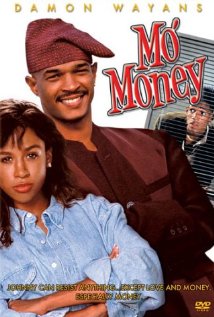
I may be dating myself a bit, but in the 90s, there was this quirky movie starring Marlon and Damon Wayans called Mo’ Money.  The gist of the movie was that the Wayans brothers were always looking for gimmicks to make money.  Whether it was Three-card Monte or using the laws of misdirection, they were constantly on the move to swindle someone in search of Mo’ Money…Mo’ Money…Mo’ Money.  Well, if I could jump in the time machine and speak to the brothers, I would say drop the hustle and start investing. Let’s explore why investing is one of the greatest hustles on earth.

Education:

The last two lessons were used to set the foundation by establishing some key principles in the world of investing – Risk vs. Reward and Diversification.  Now that we have spent some time flushing out those concepts, let’s get to the money making.  How do you make money investing? Why…I’m glad you asked?  The answer is x + y = z.    Remember that formula from pre-algebra?  Let’s see how we can use this formula to make Mo’ Money.

X + Y = Z

One way to make money is to create MSIs or Multiple Streams of income.  In Lesson #14, I told you that there are two ways to make money (z) through investing – stock appreciation (x) and dividends (y).   To illustrate, let’s look at the following diagram.

 photo

 X

The table below illustrates stock appreciation, based on the IPO or Initial Public Offering price per share of some of the most expensive stocks available.

Stock

IPO Price/Share

Today’s Closing Price/Share

Appreciation

Google $                    85 $                 1,143.20 $             1,058.20
Apple $                    22 $                    512.59 $                490.59
Face book $                    38 $                      62.19 $                  24.19
Chipotle $                    22 $                    542.43 $                520.43
Netflix $                    15 $                    404.42 $               389.42
Berkshire Hathaway A $                  113⁄8 $            164,075.09 $        164,063.72

Y

When you buy stock in a corporation, you invest in that corporation.  The stock or common stock or equity as it is known, is a security that represents ownership in a corporation…you are an OWNER! A share of common stock entitles the holder (OWNER) to receive dividends that may or not be paid, depending on the fortunes of the company.  Say you invest $10 and receive 10 shares in ABC, Inc.  That translates into $1/share. The company has a great year and indicates that it wants to share its great fortune with the owners of the corporation (its stockholders…YOU).  ABC Inc. announces that it will give each stockholder a $1 dividend for each share held.  Wow…what did you say?  As my Pastor would say, rewind and press play.

Let’s break this down.

A – You own 10 shares

B – You will receive $1 for each share that you own

C – You still own your 10 shares and now you have a $10 cash dividend.  Kaboom!

The only problem is that not all companies pay dividends, so a great investment strategy is to invest in a company that does….it’s that simple.  Dividends can come in two forms – cash and stock (see definitions below).

Resources: 

Yahoo Finance – Yahoo! Finance is a web site sponsored by Yahoo! that provides financial information and commentary with a focus on US markets.

Important terms from this lesson:

Term

Definition

Stock or Common Stock  or Equity Security that represents ownership in a corporation.
Stockholder The owner the stock.
Initial Public Offering Price The price of the first sale of stock by a private company to the public
Cash Dividend A cash payment made to shareholders of the corporation.
Stock Dividend Additional shares given to shareholders of a corporation. No cash received.

 Action Step:       Calculate Mo’ Money – test the x + y = z

  • Find the X – What is the stock appreciation on 100 shares of Google stock purchased at the IPO price?
  • Find the Y –Google announced that it would pay a $10 cash dividend to stockholders for each share held.  How much will you receive?
  • What is Z – your Mo’ Money?

What is X

What is Y

What is Z (your Mo’ Money)


Lesson #15 – Building wealth – Step 1: Create/Develop Assets – Investing 101 – Diversification

04 Tuesday Feb 2014

Posted by kenyasykes in Basic Personal Finance

≈ Leave a comment

Tags

DIVERSIFICATION, diversification, Enron employees, investments

Did anyone ever tell you not put all of your eggs in one basket?

 index

Putting all of your eggs in one basket, puts all of the eggs at risk.  But, placing a few of the eggs in another basket automatically reduces the risk that you will lose all of your eggs.  The strategy of spreading the eggs to multiple baskets is called DIVERSIFICATION.  In this lesson, we will discuss this important concept as a cornerstone to investing.

Education:

The theory of diversification rests in the simple thought that as some items lose value, other items gain in value.  The market is volatile and can change on a dime.  Just think back to economic crash of 2008. Bad news from one sector of the economy, one foreign country, or almost anything can cause the market to react negativity. This inherent volatility is why you have to hedge against sudden downturns by investing in a variety of investments in your portfolio.

When I began my graduate program in 2003, one of the first classes that I took was Personal Financial Planning.  In that class, I learned that DIVERSIFICATION REDUCES RISK.  Unbelievably, this idiom has stuck with me and I will never forget the truth in those three words.

Idiom #1 – Diversification reduces risk

Applying this theory to the grid from Lesson #14, indicates that we should spread our eggs (dollars) to various classes of investments to mitigate the risk of losing all of our eggs (dollars).  Moreover, it suggests that even if you favor one investment class – say stocks – then surely you would not invest all of your money in one stock.  If you say, yes I would, then let us revisit the Enron case.

photo

“On Dec. 2, 2001, Enron filed for bankruptcy protection in the biggest case of bankruptcy in the United States up to that point. Roughly 5,600 Enron employees subsequently lost their jobs.” (CNBC News)

This real tragedy is that of those 5,600 Enron employees, many lost everything because they failed to diversify.  Let us look at what they did wrong.

  1. They worked for Enron – their salary income was tied into Enron.
  2. They invested in Enron – their discretionary and retirement money was tied into Enron.

This is clearly a case where all of their eggs were in the same basket.  It is quite evident that they bet the house on Enron’s success and the house lost.  Enron’s demise took them down financially because all of their finances were tied into this one company.  Had they simply remembered Idiom #1 – Diversification reduces Risk, they would have made sure to invest in different stocks through their retirement plans.  Unfortunately, it is a cruel lesson that came at a very expensive price.  In the next lesson, we will examine Idiom #2 – Multiple Streams of Income and how that could have helped many of Enron’s employees.

Resources: 

Suzy Orman  – Personal Finance Guru – A two-time Emmy Award-winning television host, New York Times mega bestselling author, magazine and online columnist, writer/producer, and one of the top motivational speakers in the world today, Orman is undeniably America’s most recognized expert on personal finance.

Important terms from this lesson:

Term

Definition

Diversification A risk management technique that reduces risk by investing in a variety of investments within a portfolio.
Volatility Refers to the amount of uncertainty or risk.
  Hedge To mitigate risk.
  Portfolio Your basket of eggs or investments.

 Action Step:       Which of the following illustrates diversification?

List five of your favorite stocks or corporations.  Answer the three questions:

1.       Are the companies in the same industry?            Yes   or    No

2.       Are the companies in the same region?               Yes   or   No

3.       Are the companies the same size?                       Yes   or    No

If you answered yes to any of the three questions, then your favorite stocks may not achieve diversification.

Lesson #14 – Building wealth – Step 1: Create/Develop Assets – Investing 101 – The Basics

03 Monday Feb 2014

Posted by kenyasykes in Basic Personal Finance

≈ Leave a comment

Tags

capital gain, deep sea fishing, RISK ADVERSE, wealth building

“It is not, Lord send me the money. It’s Lord, aim me at the fish.” – TD Jakes

deep sea

Investing is like deep sea fishing.  If done properly, one small bait can catch an enormous fish.  However alike, deep sea fishing and investing are not for the faint of heart. These activities are reserved for the thrill seekers who are willing to put in on the line for a chance to catch the big fish.  Are you a thrill seeker?

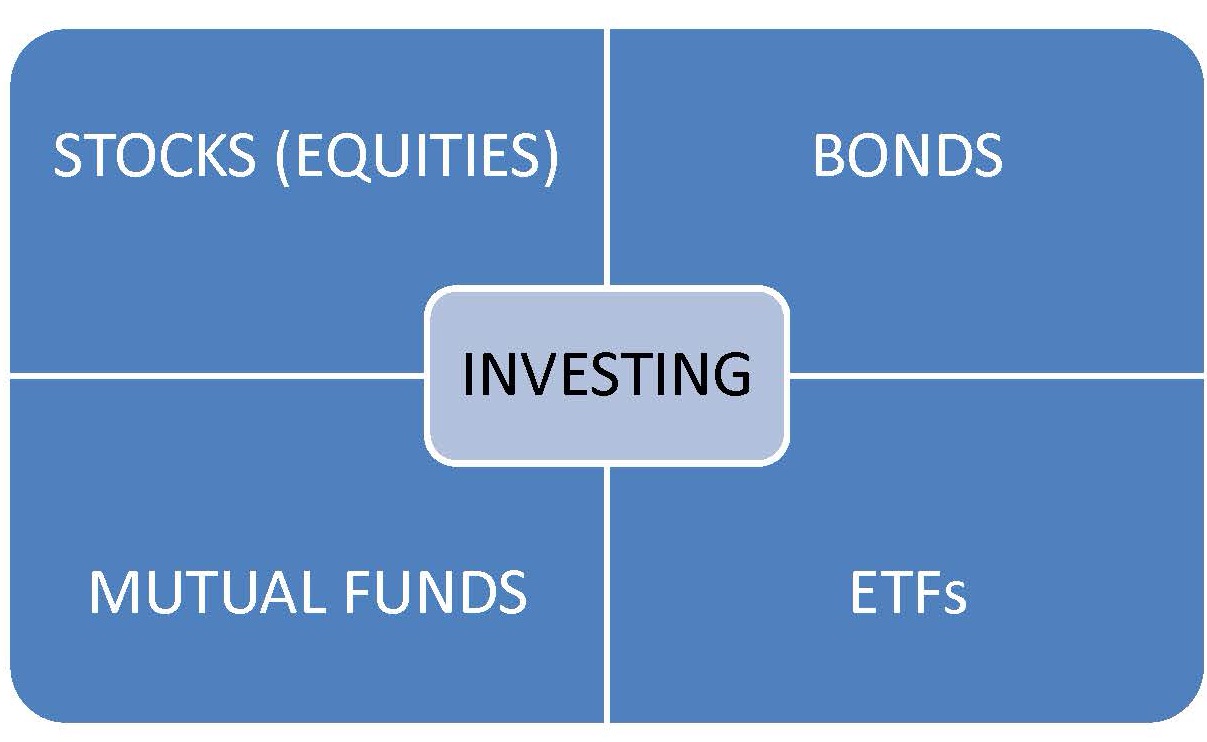
Any time you take a risk to gamble on catching a big, bigger or the biggest fish, it is called investing.  With such a broad application, we are going to narrow our efforts to the four basic categories of capital investing for wealth building purposes.

 photo

Education:

In Lesson #8, Exploring Savings Alternatives, I told you that investing is NOT a savings alternative.  However, I did not say that it was not a critical element in the wealth building process.  The upside is that investing the RIGHT way can make you wealthy, rich, a tycoon, a millionaire, and a billionaire.  However, the downside is that…

  1. Investing is RISKY!
  2. Investing can cause you to lose your money!
  3. Investing is a gamble!
  4. Investing is a speculative activity!
  5. Investing claims winners and losers everyday!

Now that we have discussed some of the negative aspects of investing, why would people partake in this risky activity?  Because, investing can lead to a HUGE reward!

 index

This phenomenon is what we call the Risk vs. Reward Principle.  Think of investing as gambling the house.  If you are lucky, then you can make a lot of money.  However, if you gamble wrong, then you can lose everything including the money that you put in.

Since we know that investing involves a measure of RISK.  Your relationship to risk, is called your RISK TOLERANCE.  People who like to gamble in favor of a high return or reward are called, RISK SEEKERS.  While people who are not willing to make this gamble are called, RISK ADVERSE.  Which are you?

In capital investing, there are two ways to make money – capital gain (appreciation) and dividend income (to be discussed in the next lesson).

To illustrate the principle of ‘capital appreciation’, let us take a look at Google.  When Google offered its stock for the first time, it sold for $85 per share.  This past Friday, that same stock sold for $1,136.19 per share.  That means that if you purchased one share in 2004 and sold it on Friday, you would have made $1,051.19.  Now, what if you would have purchased 10 shares?  You would have made $10,511.90 ($1,051.19 x 10). I love math, but it does not take a genius to see that this strategy can make your wealthy.    Your $85 capital appreciated to $1,051.19.  Kaboom!!!

We will continue this discussion in Lesson #15.

Resources: 

Jim Cramer (Mad Money, CNBC) – A nightly television show that teaches the principles of stock investing. Airs nightly at 7p and 11p on CNBC.

Important terms from this lesson:

Term

Definition

Risk The chance that an investment may not pay off or the actual return is different than expected.
Risk vs. Reward or Risk vs. Return The principle that a potential return rises with an increase in risk.
Risk Seeker The search for greater volatility and uncertainty in investments in exchange for anticipated higher returns.
Risk Adverse Unwillingness to take on additional risk even for a higher return.
Capital Capital is more durable and is used to generate wealth through investment.
Capital Gain (Appreciation) A rise in the value of an asset based on a rise in market price.

 Action Step:       What is you risk tolerance? Are you a RISK SEEKER or are you RISK ADVERSE?

Go to http://www.kmsykescpa.com/calc-section.php?calc=inv08 and answer the 10 questions to determine your risk tolerance level.

Lesson #8 – Building wealth – Step 1: Create/Develop Assets – Exploring Savings Alternatives

28 Tuesday Jan 2014

Posted by kenyasykes in Basic Personal Finance

≈ Leave a comment

Make you money get a job…make it work…while you sleep!

Did you know that a dollar a day could grow into a million dollars?

Now that I have your attention, I want to teach you to RESPECT YOUR DOLLARS!

In Matthew 25:14-30, Jesus teaches the timeless Parable of the Talents.  You can and should read it for yourself, but it teaches the principal of being profitable and that no matter what you have, it can be increased if invested properly.  Verse 25:27 in particular reads, “So you ought to have deposited my money with the bankers, and at my coming I would have received back my own with interest.” Wow, the bible never ceases to amaze me, but in this instance, Jesus was actually acting as a financial advisor by giving very sound advice.  I will let the theologians analyze that, but I will take the lesson at face value.

Now that you have diagnosed your financial health through your net worth, found a ripple through your cash flow budget and created a vision, you are ready to begin the real work.  In this lesson, I would like to teach you about the different methods to save your money and earn INTEREST…that is putting your money to work.

First, think about money as a seed.  If you hold the seed in your hand, then it will remain just a seed and/or die. However, if you plant or sow the seed, then the seed has the opportunity to grow and produce fruit.  For financial purposes, WE WANT FRUIT!  Fruit will enable you to reach your goals and live a life of financial freedom. Fruit creates more fruit!

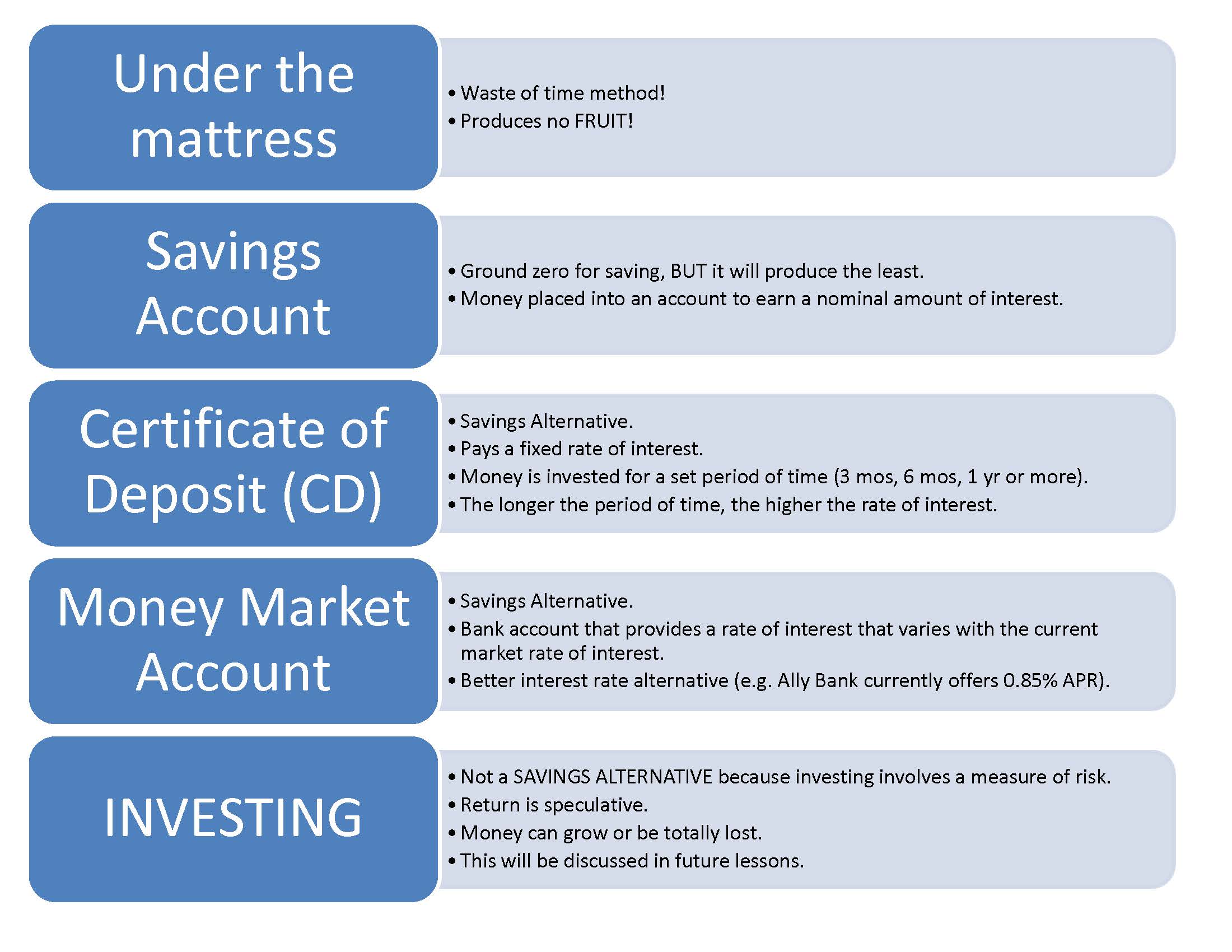
Here are some Savings Alternatives that you may aid you to produce fruit.

 Savings Alternatives

Resources:

  1. Bankrate.com    – Great consumer finance website to compare financial products.
  2. Ally.com               – Offers competitive rates for its savings, CD and Money Market Accounts.

Important terms from this lesson:

  1. Interest                – Return on the use of your money
  2. APR                        – Annual Percentage Rate is the rate that you will receive if your money is invested for a full annual period. For example, if you invest $1000 at a 1% APR, you would earn $10 annually on your investment.

Action Step:       Pick a Savings Alternative for 2014.

  1.        Go to bankrate.com
  2.        Click the BANK ACCOUNTS tab.
  3.        Play with the menu options to see the different savings alternatives available to you.
  4.        Pick a new one for 2014 and begin saving today.

Lesson #3: Know your worth (Part 3) – Liabilities: How debt is keeping you from being wealthy!

23 Thursday Jan 2014

Posted by kenyasykes in Basic Personal Finance

≈ Leave a comment

 Image

ASSETS – LIABILITIES = NET WORTH

In the first two lessons, we concentrated on the concept of assets and what you OWN, however, that is only one side of the coin and I would say the “positive” side.  But, for every ‘ying’, there is also a ‘yang’…the flip or “negative” side of the coin.  In this lesson, the flip side of the coin is called  LIABILITIES.  This concept is more prevalent and dare I say, more important than knowing your assets, because LIABILITIES are what you OWE!

Let’s think about Michael Jackson before his untimely death (R.I.P. King of of Pop).  Well, Michael Jackson had a great deal of assets…remember the ferris wheel at Neverland? The white glove? Ironically, which is currently hanging in the Mandalay Bay Hotel in Las Vegas  Although he had a plethora of assets, the man in the mirror actually OWED more than the value of those assets. That put him in a hole, which I still believe was the impetus for his early death. So, let’s take a deeper look at your LIABILITIES.

In laymen’s terms, an LIABILITY is something that you “OWE”!  That’s it…you OWE some person, business or entity (a debt).  You are in the hole!  Several years ago, a friend of mine named Cliff Goins IV wrote a book entitled, Stop Digging!:  A Spiritual Guide to Financial Freedom and Sound Stewardship, that you can still purchase on amazon.com (http://amzn.to/1iqIfov) I always loved that title because you cannot realize wealth until you did yourself out of the hole.

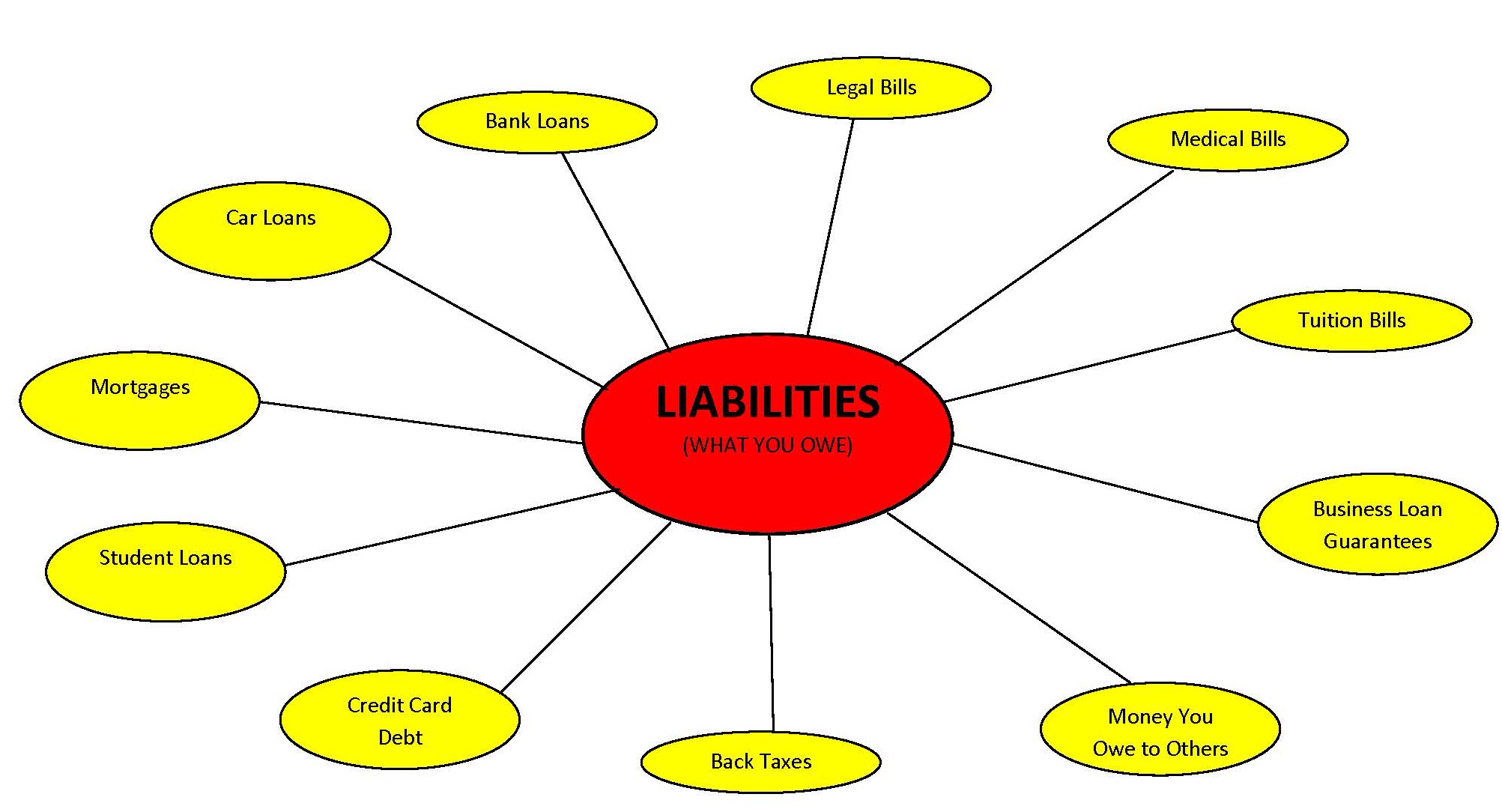
Some examples of LIABILITIES for individuals are:

 Image

Important terms from this lesson:

  1. Liabilities    –  Something that you OWE.
  2. Debt            –  The total value of your liabilities (how deep the hole is).

Action Step:       What LIABILITIES do you OWE?

Please print and complete the Liabilities Inventory Worksheet.  This may take a little effort, but force yourself to jot down every single item that you OWE and take a real inventory of the size of the hole that we have to dig from!  You absolutely need to understand what you OWE to determine how much digging will you need!

Click the link to download the Liabilities Inventory Worksheet – http://bit.ly/1iskbBV

Lesson #2: Know your worth (Part 2) – Assets: The building blocks of wealth!

22 Wednesday Jan 2014

Posted by kenyasykes in Basic Personal Finance

≈ Leave a comment

Image

ASSETS – LIABILITIES = NET WORTH

In Lesson #1, the goal was to introduce a very important (critical) concept to the discussion of wealth, ASSET.  As important and critical as it may be, many people have no reference for what this simple five-letter word means. Assets are quite simply, the building blocks of wealth!  Without assets, wealth just does not exist much in the same that you cannot build a mansion without a solid foundation. Then how can something so important and critical to the understanding of wealth be foreign to so many people?  The answer is that we live in a SPENDING society of super Consumerism (my new term).  The people who sell goods are often ASSET, while many of our super Consumers are ASSET POOR.  It comes down to understanding your assets, namely how they are created, accumulated, protected and the transferred to future generations.  What do the following families have in common?

The Kennedy Family

The Rockefeller Family

The Carnegie Family

Forbes Magazine calls these families, The Dynasties.  You can see many of the current dynasties highlighted in this article http://www.forbes.com/2002/02/28/0228dynasties.html.

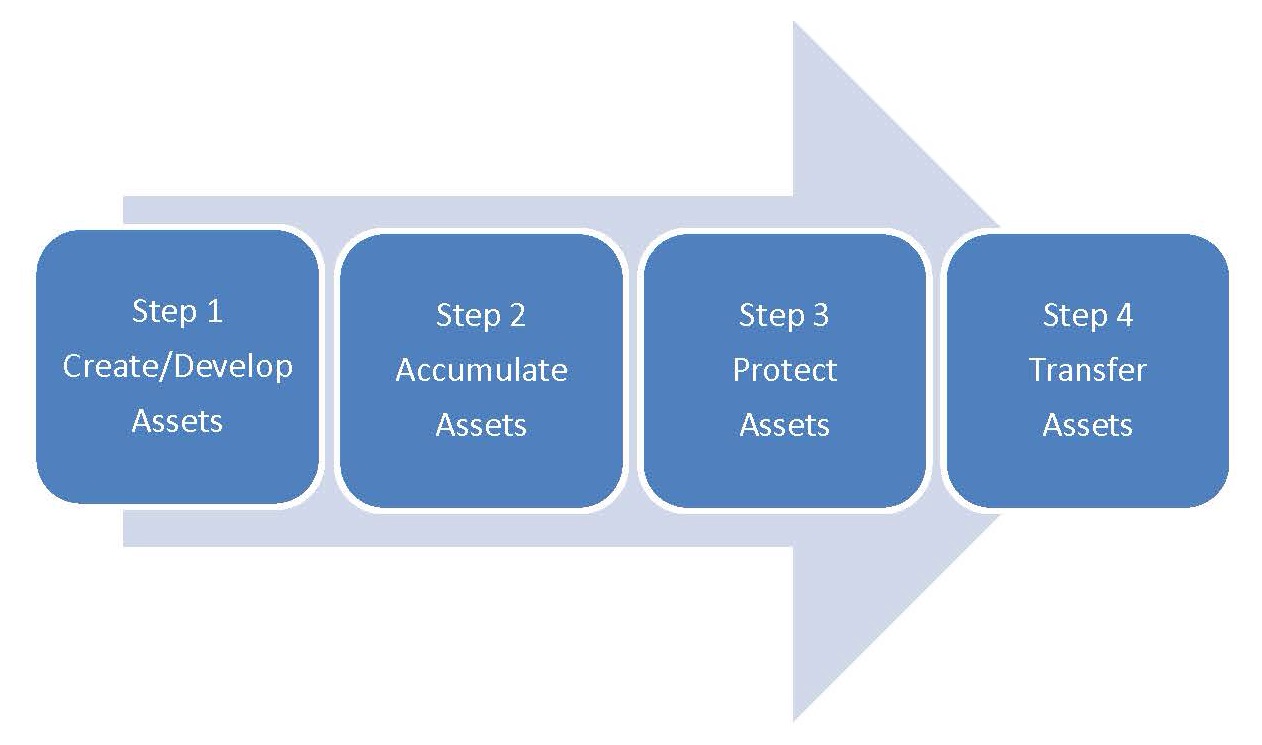
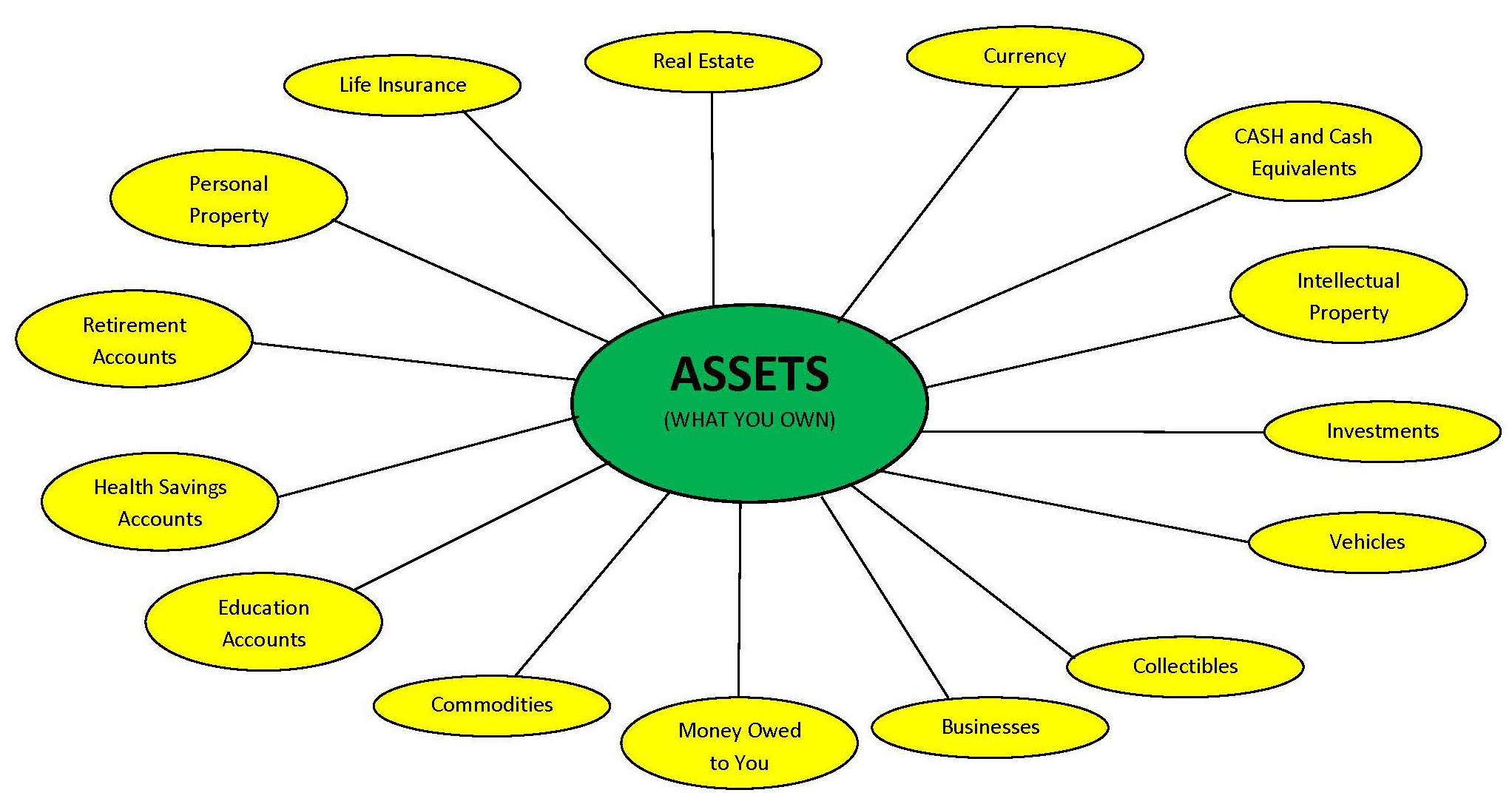
Dynasties are families who create ASSETS >>> accumulate ASSETS >>> protect ASSETS >>> transfer those ASSETS to future generations.  That is it! There is nothing special or unique about them. It is something that everyone…all of us can do! Let’s look at the journey of ASSETS through this illustration.

photo2

In Lesson #1, I asked you to complete the Asset Inventory Worksheet.  It’s okay if you have not finished, but I want you to begin thinking about everything that you have.   For my visual learners, go through each bubble, and check off what you currently OWN. So, do you have any ASSETS?

photo

Important terms from this lesson:

  1. Asset Rich           – The abundance of ASSETS.
  2. Asset Poor          –  The absence of ASSETS.
  3. Dynasties            –  Families who create, accumulate, protect and transfer ASSETS to future generations.

Action Step:       Let’s Create some ASSETS!

The easiest asset to create is cash because most of us have at least $1! The cash in your pocket or pocketbook is sitting in the chamber ready to be fired at the next purchase.  Instead of doing that, I want to challenge you to look at that cash as your opportunity to CREATE AN ASSET.  Many of you have heard about the 52 week money challenge.  I actually did this in 2013 along with some colleagues.  On 1/3/14, I took that money to my financial adviser at Edward Jones and we put that cash into a Bond Fund (Investments Category).  I will explain what that means in a future lesson.  It’s that easy, I took something that was lying around ready to be spent and created an asset.  I’m doing it again for 2014, but instead of holding it and then taking it to my adviser, I have set up a money market fund and each week, I transfer that week’s contribution to the fund.  Now, my money is making money (interest – to be explained in the future).

I want you to take the 52 week money challenge for yourself and each of your children.

For you, follow the program without deviating.  At the end of the year, you will have CREATED A CASH ASSET worth $1,378.

For your children, divide the normal 52 week challenge by the number of children that you have.

For example, if you have two children, the contribution for Week 1 is $1.  You would split that so that each child has $.50 saved for Week 1. 

Repeat this every week following the chart.  At the end of the first month, you will open up a money market account for yourself and your children. Don’t worry, I will teach you about Money Market Funds and advise you about how to select the best option for you and your family.

Click the link to download the 52 Week Money Challenge Worksheet – http://bit.ly/1edTVUz


Lesson #1 – Know your worth (Part 1) – What is an Asset?

21 Tuesday Jan 2014

Posted by kenyasykes in Basic Personal Finance

≈ Leave a comment

Tags

Personal Finance; Wealth, Wealth Gap; Financial Literarcy; Finance

Before you can build wealth, you must first understand the concept of worth…worth…worth!  I’m going to dedicate the first few lessons to helping you diagnose and understand your net worth! For financial purposes, worth is expressed in the term “net worth” and is illustrated in the following formula:

ASSETS – LIABILITIES = NET WORTH

This simple formula  is the same for Mark Zuckerberg, Bill Gates, Oprah Winfrey and YOU!  Your net worth can be either positive or negative, but your road to wealth begins with understanding how this simple formula can diagnosis your current affairs and put you on the road to success.  This is the bedrock of personal finance and we can accomplish nothing until you understand what these terms mean.  Wealth begins when your ASSETS are greater than your LIABILITIES!  It’s that simple, but what are ASSETS and LIABILITIES?

In layman’s terms, an ASSET is something that you “OWN” of  value!  That’s it…you OWN it (as in ownership) and it’s yours or you have a principal claim to it, which can be expressed in a value!  Some examples of ASSETS for individuals are as follows:

  • Cash
    • Savings Account
    • Checking Account
    • Prepaid Cards (e.g. Simple, Western Union, Chase Liquid Card)
    • Money Market Accounts
    • Cash Value of Annuities
    • CDs
  • Investments  (other than retirement – you own these either in your name or jointly with one or more persons. Some examples are:
    • Stocks
    • Bonds
    • ETFs
    • Mutual Funds
    • Municipal Investments
    • Other
  • Money owed to you (think – Cousin Betty owes me $50)
  • Retirement Accounts
    • IRA (Roth , Traditional, SEP, Simple)
    • 401k, 403b, 457
    • Keogh
    • Pension Plans
  • Real Estate
    • Your Prinicpal Home, condo, or coop
    • Second Home
    • Timeshare
    • Vacation properties
    • Rental properties
  • Businesses (where you own an interest)
  • Household effects (in some cases, clothing)
  • Collectibles (jewelry, art, etc.)
  • Commodities (gold or silver)
  • Currency (other than USD that you hold)
  • Vehicles (autos, RVs, etc.)
  • Health Savings Accounts
  • College Savings Plans
  • Flexible Spending Account (be careful here because this can be lost)
  • Whole Life insurance (cash surrender value)
  • Personal Property (boats)

The list can go on and on, but it’s something that you OWN that has a liquidating value.  Liquidating simply means that if needed, the respective ASSET can be sold and converted to cash.

Important terms from this lesson:

  1. Net Worth – The difference between your assets and your liabilities.  It can be either positive or negative.
  2. ASSET    –  Something that you OWN that has a value attached to it.
  3. Liquidating Value – The value that you would receive from  an object sold today.

Action Step:       What ASSETS do you OWN?

Please print out and complete the Asset Inventory worksheet. This may take a little effort, but force yourself to jot down every single item that you own and take an real inventory of your life!  For categories like ‘household effects’, simply ascribe a single value to your total possessions.  I mean it!  Pull out your statements if needed, find your property tax bill to see what your house is worth, log on to your web account if needed, but you absolutely need to understand what you OWN! Take an inventory of your life!

Click the link to download the Asset Inventory Worksheet – http://bit.ly/1kVbJwI

Newer posts →

Recent Posts

  • Never Stop Learning!
  • Lesson #83 – Financial Freedom Friday for Kids
  • Lesson #82 – Black CEO: Do More Than Save if You Want to Be Wealthy
  • Lesson #81 – Last-Minute Tax Tips to Maximize Your Savings (reposted from The Huffington Post)
  • Lesson #80 –Can Paying Your Taxes Late Affect Your Credit Score? (reposted from The Huffington Post)

Recent Comments

kenyasykes's avatarkenyasykes on Lesson #26 – Encouragement…
kenyasykes's avatarkenyasykes on Lesson #52 – The Flipside : 10…
Unknown's avatarLesson #52 – The Fli… on Lesson #52 – The Flipside : 10…
TheKnowledgeofWords's avatarcocolaelle on Lesson #26 – Encouragement…

Archives

  • September 2014
  • May 2014
  • April 2014
  • March 2014
  • February 2014
  • January 2014

Categories

  • Assets
  • Basic Personal Finance
  • Encouragement
  • Kids' Money
  • Uncategorized

Meta

  • Create account
  • Log in
  • Entries feed
  • Comments feed
  • WordPress.com

Enter your email address to follow this blog and receive notifications of new posts by email.

Join 22 other subscribers

Recent Posts

  • Never Stop Learning!
  • Lesson #83 – Financial Freedom Friday for Kids
  • Lesson #82 – Black CEO: Do More Than Save if You Want to Be Wealthy
  • Lesson #81 – Last-Minute Tax Tips to Maximize Your Savings (reposted from The Huffington Post)
  • Lesson #80 –Can Paying Your Taxes Late Affect Your Credit Score? (reposted from The Huffington Post)

Recent Comments

kenyasykes's avatarkenyasykes on Lesson #26 – Encouragement…
kenyasykes's avatarkenyasykes on Lesson #52 – The Flipside : 10…
Unknown's avatarLesson #52 – The Fli… on Lesson #52 – The Flipside : 10…
TheKnowledgeofWords's avatarcocolaelle on Lesson #26 – Encouragement…

Archives

  • September 2014
  • May 2014
  • April 2014
  • March 2014
  • February 2014
  • January 2014

Categories

  • Assets
  • Basic Personal Finance
  • Encouragement
  • Kids' Money
  • Uncategorized

Meta

  • Create account
  • Log in
  • Entries feed
  • Comments feed
  • WordPress.com

Facebook

Facebook

Blog at WordPress.com.

Privacy & Cookies: This site uses cookies. By continuing to use this website, you agree to their use.
To find out more, including how to control cookies, see here: Cookie Policy
  • Subscribe Subscribed
    • Education and Action
    • Already have a WordPress.com account? Log in now.
    • Education and Action
    • Subscribe Subscribed
    • Sign up
    • Log in
    • Report this content
    • View site in Reader
    • Manage subscriptions
    • Collapse this bar
 

Loading Comments...