
Do you have a 401(k)?
Do you have a 403(b)?
Do you have a 457 plan?

On May 22, 1980, my life changed when the Pac-Man video game was released. I’m sure you are wondering why I would use an image of Pac-Man to discuss Mutual Funds. Well, the video game provides a great way to demonstrate how Mutual Funds give you PURCHASING POWER. Think of yourself as Pac-man. When the game opened, you were being chased by larger investors who could literally swallow you up. However, if you were able to make it to a power pill, it gave you super powers to chomp up the pellets (investments). Well, mutual funds are your power pill. Without it, most investors are intimidated by the investing landscape; however, with the assistance of a power pill, you could magnify your potential to swallow up investments. Most of us lack the capital resources to invest effectively in large companies. However, when we pool our resources, we have the ability to invest on a large scale.

Education:
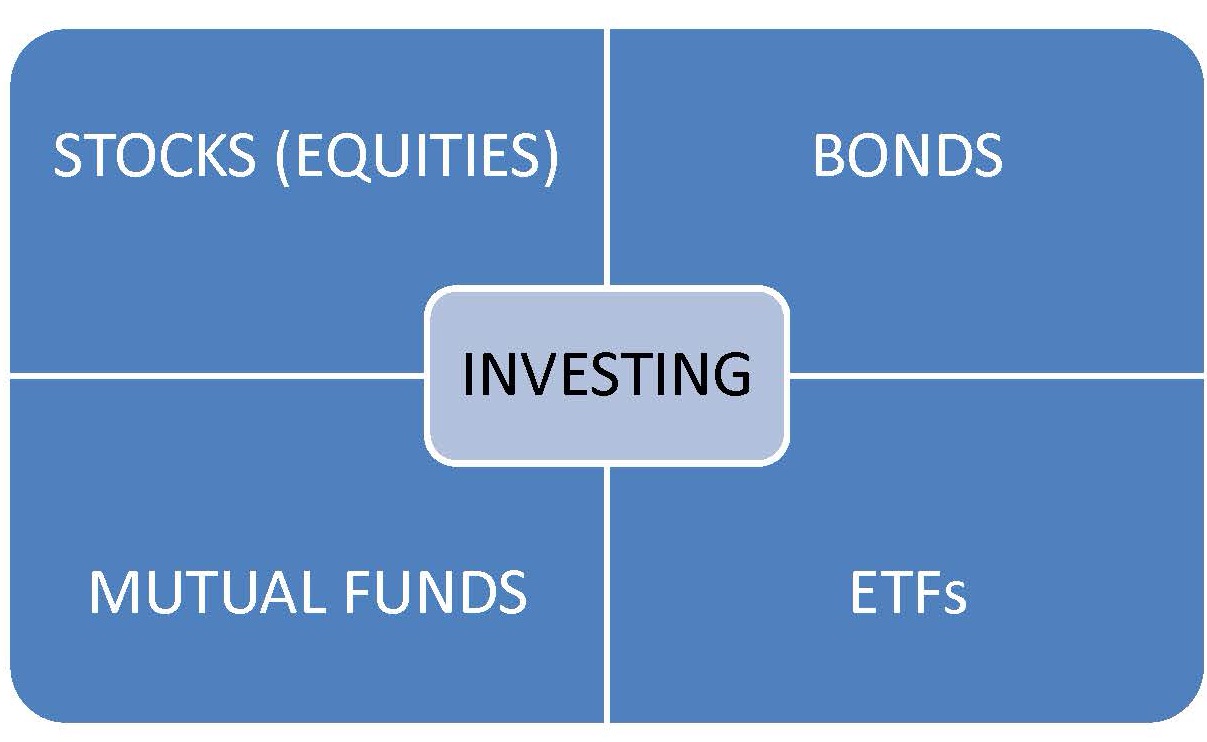
In Lesson #15, the INVESTING diagram was used to introduce the most popular investment alternatives for the average investor. Because of the pervasiveness and utility of stocks and bonds, I dedicated two full weeks of lessons to discuss them in greater detail. Because those are the most common investments, it only made sense to begin our focus on those two areas. Today’s lesson will be dedicated to exploring Mutual Funds.
Do you have a 401(k)?
Do you have a 403(b)?
Do you have a 457 plan?
If you answered yes to any of those questions, then either you are an employee or have been an employee of an organization that offered these qualified retirement plan options to you. However, did you know these plans are only able to invest in mutual funds? HMMMM…
If you are astute, then you will notice that I did not ask you if you had an IRA plan. That’s because IRA plans are unqualified plans. What does that mean? It means that they are NOT tax-advantaged plans. Let’s just keep it at that level for now because the mechanics of the IRA plan is not the intention of this lesson. We will table that discussion for another day.
What is a MUTUAL FUND? Let’s analyze this by breaking it down to bit-sized pieces.
Mutual – to hold in common by two or more parties, a pool.
Fund – a source of money that is allocated to a specific purpose.
A mutual fund is an:
- Investment vehicle
- Consists of a pool of money collected from people (investors) with a common purpose (to invest)
- Organized into classes (stocks, bonds, cash)
- Operated by money managers who are in charge of the pool
- To achieve diversification
Consider this – you and your friends decide that you want to start a fund to invest in small businesses in your area. Is this a mutual fund?
Let’s test our simple definition:
Is it an investment vehicle? Yes
Does it consists of a pool of money collected from people with a common purpose? Yes
Is it organized into classes (stocks, bonds, cash)? Yes
Is it operated by a money manager? Yes, the group
Does it seek to achieve diversification? Yes, it will invest in multiple businesses
Then yes, this is a mutual fund. Of course, that example is quite innocuous, but it’s critical to chop these terms into bit-sized pieces that you can ingest. Now that we have a basic framework, let’s advance the discussion.
Mutual Fund Investment Classes
- Equity Fund (invest mostly in stocks)
- Large Cap
- Mid-cap
- Small Cap
- Growth
- Value
- Blend
- International
- Funds of Funds
- And so on…
- Bond (invest mostly in bonds)
- Government Bonds
- Corporate Bonds
- Long-term Bonds
- Short-term Bonds
- Fixed Income (invest in municipal bonds)
As you can see, the mutual fund investment classes can be broken down and targeted to achieve your investment objective. Since most of us do not have the capital or wherewithal of a Warren Buffett or Karl Icahn, who can invest large amounts of money in individual investments, mutual funds give small investors (the majority of us) the ability to pool our resources with other investors to purchase the same type of investments. A mutual fund is formed for PURCHASING POWER. For example, let’s take the tech industry. Within that industry, you may have companies like Microsoft, Apple, Intel, Google. The individual stock prices of all of those companies are extremely expensive. Even if you could buy a few shares, that wouldn’t make a difference. However, if you teamed up with others, then together you would have a large pool of funds to invest in all of these companies.
Advantages of Mutual Funds
- Purchasing Power
- Plethora of mutual fund classes (can target investments)
- Diversification
- Experienced Money Manager
- Dividend reinvestment (buy more shares)
- Some mutual funds offer investors different types of shares
Disadvantages of Mutual Funds
- Hidden Fees (BE CAREFUL HERE)
- Load vs No load (to be discussed in Lesson #29)
- Limited exposure to lone investments (your favorite investment may only represent a small portion of the fund’s holdings)
- Unscrupulous money manager
- Tax issues (capital gain distributions)
- Poor trade execution (may not give you the best price)
- Some mutual funds offer investors different types of shares
If you noticed, one item was listed as both an advantage and a disadvantange of mutual fund investing. In the next lesson, we will explore this in greater detail.
Resources:
Money Control Investor Education (http://www.moneycontrol.com/investor-education/) – Online classroom providing tutorials on Mutual Funds.
Important terms from this lesson:
|
Term |
Definition |
| Mutual Fund | An investment program funded by shareholders that trades in diversified holdings and is professionally managed. |
| Qualified Retirement Plan | A plan that meets requirements of the Internal Revenue Code and as a result, is eligible to receive certain tax benefits. These plans must be for the exclusive benefit of employees or their beneficiaries. |
| Money Manager | A business or bank responsible for managing the securities portfolio of an individual or institutional investor. |
Action Step: Watch the video, An Introduction to Mutual Funds.
 Education and Action