Bonds may have the distinction of being the least sexy investment instrument. Where stocks are sexy and risky and generally yield higher returns, bonds, on the other hand, are known for their stability. Sounds boring, huh? Maybe, but let’s look closer.
Investing in bonds is typically less risky than investing in stocks. Consequently, bonds are a preferred investment alternative for people who are “risk adverse”, who may not be able to take on additional risk or who prefer a certain return on their investment. Bonds are known as “fixed income” securities. Immediately, it conjures up thoughts of elderly people who are on a fixed income. Yes, it may not drip sex appeal, but whatever it lacks, it makes up for it in other areas. The investment is “fixed” because you know exactly what you’re going to get. There is no gambling involved. It it (the bond) says that it will pay 10%, then you will get 10%. On the other hand, if it (the bond) says that it will pay .05%, then that’s all that what you will get. Which return is more sexy, a guaranteed 1% or a potential 10%? Hmmm…
Education:
Last week, we focused solely on stocks. It was important to spend the time needed to introduce stocks because for the majority of us, stocks will be the best investment vehicle to build wealth at this stage in our lives (the creation/development phase). However, as we move through the wealth building continuum from creating to accumulating to protecting and then distributing, our focus will move towards conservation. As we grow older and near retirement, our capacity to create and accumulate assets will likely diminish. Given that, it will be imperative to protect those investments to ensure that they are available during your golden years.
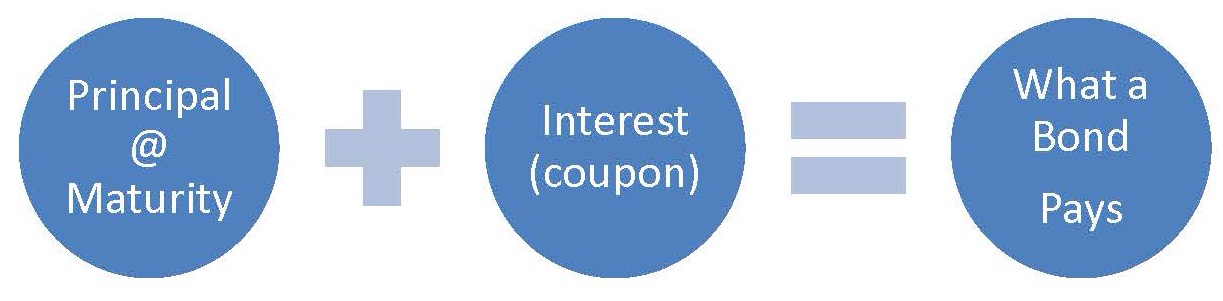
A BOND is a debt investment in which an investor loans a “fixed” amount of money for a “fixed” period of time at a “fixed” interest rate. Stated another way, the indebted person (issuer) issues a bond that states the following two things:
- The interest rate (coupon) that will be paid, and
- When the loaned funds (bond principal) are to be returned (maturity date).
The best example of this is a student loan.
Example:
Sallie Mae loans Dave MBA $10,000. Dave MBA does not have to pay the loan back for four years, but he must pay Sallie Mae 10% each year for the funds or $1,000 ($10,000 x 10%) per year. Sallie Mae likes to receive those payments every six months, so Dave MBA pays Sallie Mae $500 every six months.
To illustrate:
Year 1
1/1/X1 – Dave MBA gets $10,000 from Sallie Mae
6/30/X1 – Dave MBA pays Sallie Mae $500
12/31/X1 – Dave MBA pays Sallie Mae $500
Year 2
6/30/X2 – Dave MBA pays Sallie Mae $500
12/31/X2 – Dave MBA pays Sallie Mae $500
Year 3
6/30/X3 – Dave MBA pays Sallie Mae $500
12/31/X3 – Dave MBA pays Sallie Mae $500
Year 4
6/30/X4 – Dave MBA pays Sallie Mae $500
12/31/X4 – Dave MBA pays Sallie Mae $500 plus gives back the $10,000
Sallie Mae made $4,000 (or 40%) on the $10,000 that it loaned to Dave MBA – Kaboom!
Sure, I tainted it for illustration purposes, because who would borrow money at 10% when interest rates are historically low? In my example, we would rush to loan the money to Dave MBA if we knew that we would get a definite 10% return. However, that is not always the case for most bonds. The chart below shows the interest rates on some US Treasury and Corporate bonds.
U.S. Treasury Yields
|
Maturity |
Last |
Previous |
| 3 Month | 0.06% | 0.07% |
| 2 Year | –% | — |
| 5 Year | 1.48% | 1.46% |
| 10 Year | 2.68% | 2.68% |
| 30 Year | 3.66% | 3.66% |
Corporates
|
Index Name |
Last |
Previous |
| Investment Grade | 3.08% | 3.12% |
| High Yield | 5.59% | 5.65% |
Of course, risk is not completely diminished and remains a factor because not all bonds are equal. The safest bond is the Treasury bond, which is issued by the US Government. Because the government can effectively print money, these investments are safe and possess no risk at all. As a result, the return on the investment is extremely low. In essence, you give up a potentially higher return for safety. Conversely, the riskiest bond is a corporate bond because your return is tied to the health of that entity. Because it is riskier, the coupon or interest rate that they would need to offer you to invest your money with them would naturally be higher.
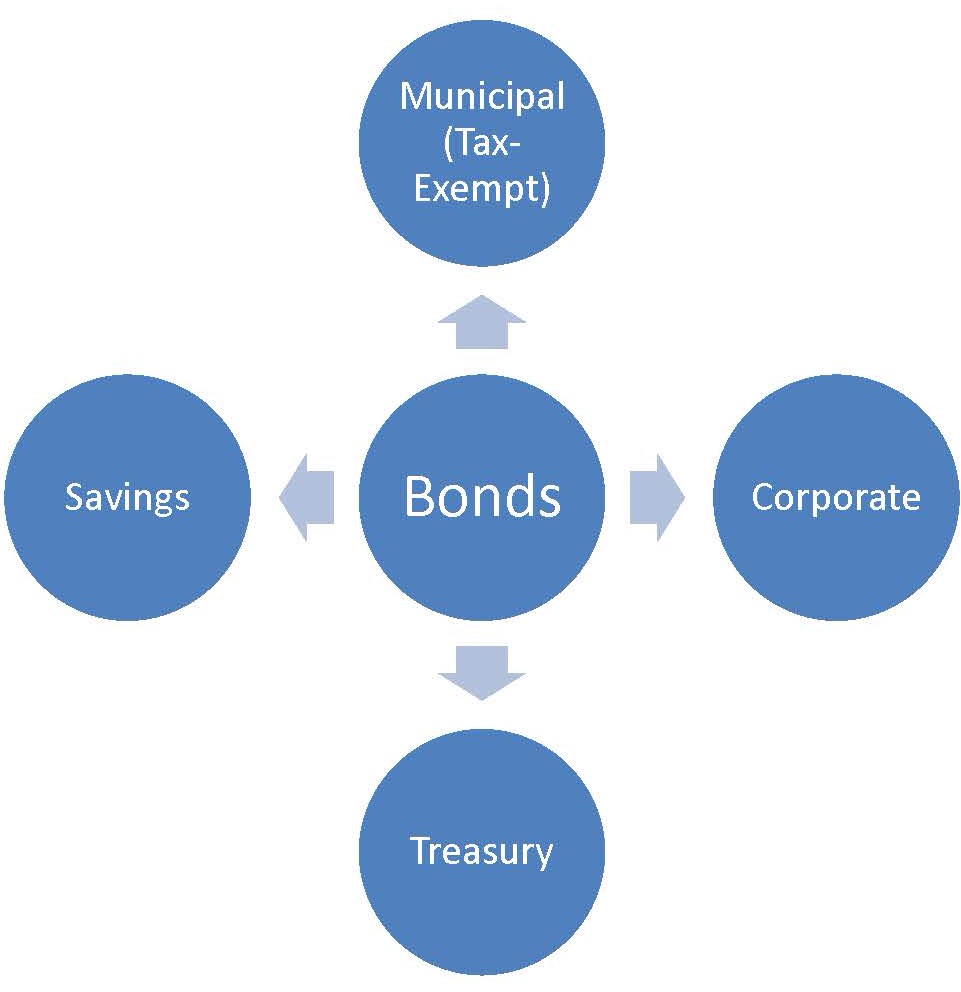
Over the next few days, we will delve into the different types of bonds available to investors.
Resources:
CNN Money (http://money.cnn.com/data/bonds/) – CNNMoney.com is a business website. The site is the online home of Fortune and Money.
Important terms from this lesson:
|
Term |
Definition |
| Bond | It is a debt security, under which the issuer owes the holders a debt and, depending on the terms of the bond, is obliged to pay them interest (the coupon) and/or to repay the principal at a later date, termed the maturity date |
| Coupon | Interest rate on bond. |
| Maturity Date | Due date of the bond. When the bond principal must be repaid. |
| Bond Prinicpal | The original amount loaned. |
Action Step: Name the Bond components.
Go back to the example above and identify the following:
1. Who is the issuer of the bond?
2. Who is the borrower?
3. What is the coupon rate of the bond?
4. What is the bond period?
 Education and Action