
Do you want Mo’ Money…Mo’ Money…Mo’ Money?
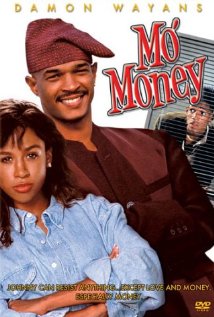
I may be dating myself a bit, but in the 90s, there was this quirky movie starring Marlon and Damon Wayans called Mo’ Money. The gist of the movie was that the Wayans brothers were always looking for gimmicks to make money. Whether it was Three-card Monte or using the laws of misdirection, they were constantly on the move to swindle someone in search of Mo’ Money…Mo’ Money…Mo’ Money. Well, if I could jump in the time machine and speak to the brothers, I would say drop the hustle and start investing. Let’s explore why investing is one of the greatest hustles on earth.
Education:
The last two lessons were used to set the foundation by establishing some key principles in the world of investing – Risk vs. Reward and Diversification. Now that we have spent some time flushing out those concepts, let’s get to the money making. How do you make money investing? Why…I’m glad you asked? The answer is x + y = z. Remember that formula from pre-algebra? Let’s see how we can use this formula to make Mo’ Money.
X + Y = Z
One way to make money is to create MSIs or Multiple Streams of income. In Lesson #14, I told you that there are two ways to make money (z) through investing – stock appreciation (x) and dividends (y). To illustrate, let’s look at the following diagram.

X
The table below illustrates stock appreciation, based on the IPO or Initial Public Offering price per share of some of the most expensive stocks available.
|
Stock |
IPO Price/Share |
Today’s Closing Price/Share |
Appreciation |
| $ 85 | $ 1,143.20 | $ 1,058.20 | |
| Apple | $ 22 | $ 512.59 | $ 490.59 |
| Face book | $ 38 | $ 62.19 | $ 24.19 |
| Chipotle | $ 22 | $ 542.43 | $ 520.43 |
| Netflix | $ 15 | $ 404.42 | $ 389.42 |
| Berkshire Hathaway A | $ 113⁄8 | $ 164,075.09 | $ 164,063.72 |
Y
When you buy stock in a corporation, you invest in that corporation. The stock or common stock or equity as it is known, is a security that represents ownership in a corporation…you are an OWNER! A share of common stock entitles the holder (OWNER) to receive dividends that may or not be paid, depending on the fortunes of the company. Say you invest $10 and receive 10 shares in ABC, Inc. That translates into $1/share. The company has a great year and indicates that it wants to share its great fortune with the owners of the corporation (its stockholders…YOU). ABC Inc. announces that it will give each stockholder a $1 dividend for each share held. Wow…what did you say? As my Pastor would say, rewind and press play.
Let’s break this down.
A – You own 10 shares
B – You will receive $1 for each share that you own
C – You still own your 10 shares and now you have a $10 cash dividend. Kaboom!
The only problem is that not all companies pay dividends, so a great investment strategy is to invest in a company that does….it’s that simple. Dividends can come in two forms – cash and stock (see definitions below).
Resources:
Yahoo Finance – Yahoo! Finance is a web site sponsored by Yahoo! that provides financial information and commentary with a focus on US markets.
Important terms from this lesson:
|
Term |
Definition |
| Stock or Common Stock or Equity | Security that represents ownership in a corporation. |
| Stockholder | The owner the stock. |
| Initial Public Offering Price | The price of the first sale of stock by a private company to the public |
| Cash Dividend | A cash payment made to shareholders of the corporation. |
| Stock Dividend | Additional shares given to shareholders of a corporation. No cash received. |
Action Step: Calculate Mo’ Money – test the x + y = z
- Find the X – What is the stock appreciation on 100 shares of Google stock purchased at the IPO price?
- Find the Y –Google announced that it would pay a $10 cash dividend to stockholders for each share held. How much will you receive?
- What is Z – your Mo’ Money?
|
What is X |
What is Y |
What is Z (your Mo’ Money) |
 Education and Action