

ASSETS – LIABILITIES = NET WORTH
In Lesson #1, the goal was to introduce a very important (critical) concept to the discussion of wealth, ASSET. As important and critical as it may be, many people have no reference for what this simple five-letter word means. Assets are quite simply, the building blocks of wealth! Without assets, wealth just does not exist much in the same that you cannot build a mansion without a solid foundation. Then how can something so important and critical to the understanding of wealth be foreign to so many people? The answer is that we live in a SPENDING society of super Consumerism (my new term). The people who sell goods are often ASSET, while many of our super Consumers are ASSET POOR. It comes down to understanding your assets, namely how they are created, accumulated, protected and the transferred to future generations. What do the following families have in common?
The Kennedy Family
The Rockefeller Family
The Carnegie Family
Forbes Magazine calls these families, The Dynasties. You can see many of the current dynasties highlighted in this article http://www.forbes.com/2002/02/28/0228dynasties.html.
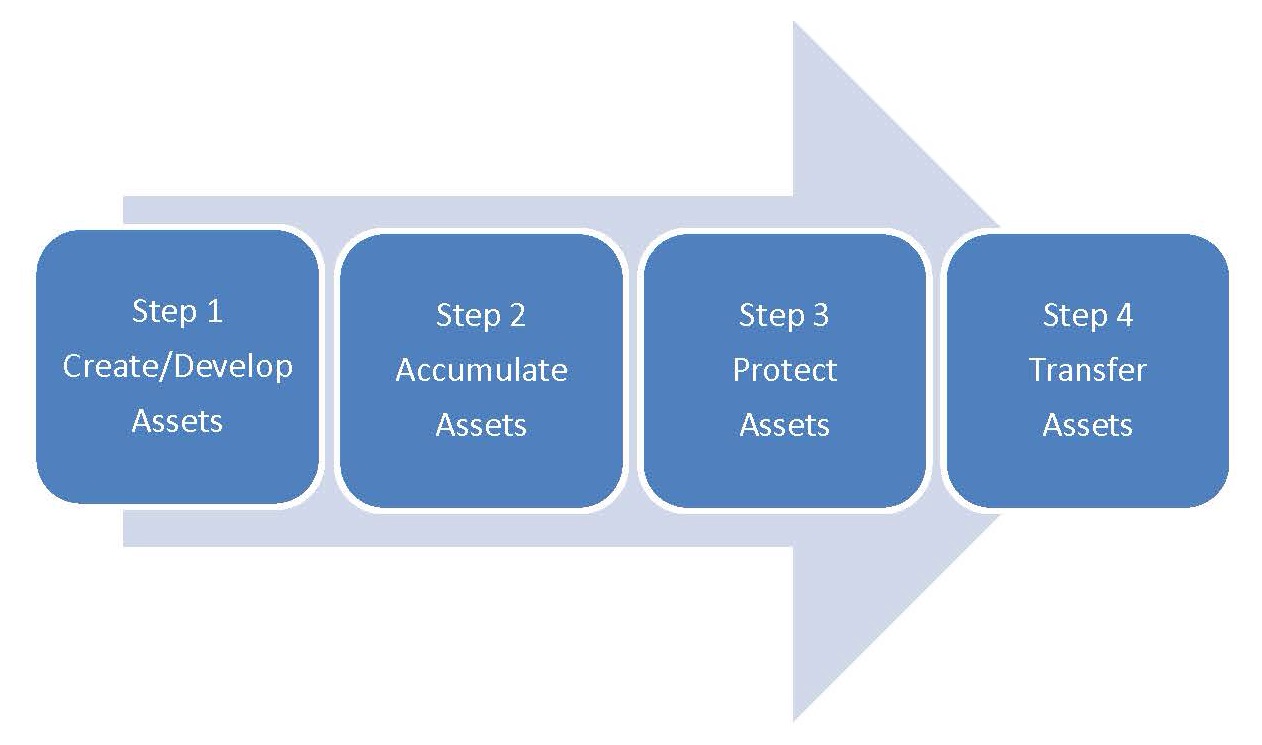
Dynasties are families who create ASSETS >>> accumulate ASSETS >>> protect ASSETS >>> transfer those ASSETS to future generations. That is it! There is nothing special or unique about them. It is something that everyone…all of us can do! Let’s look at the journey of ASSETS through this illustration.
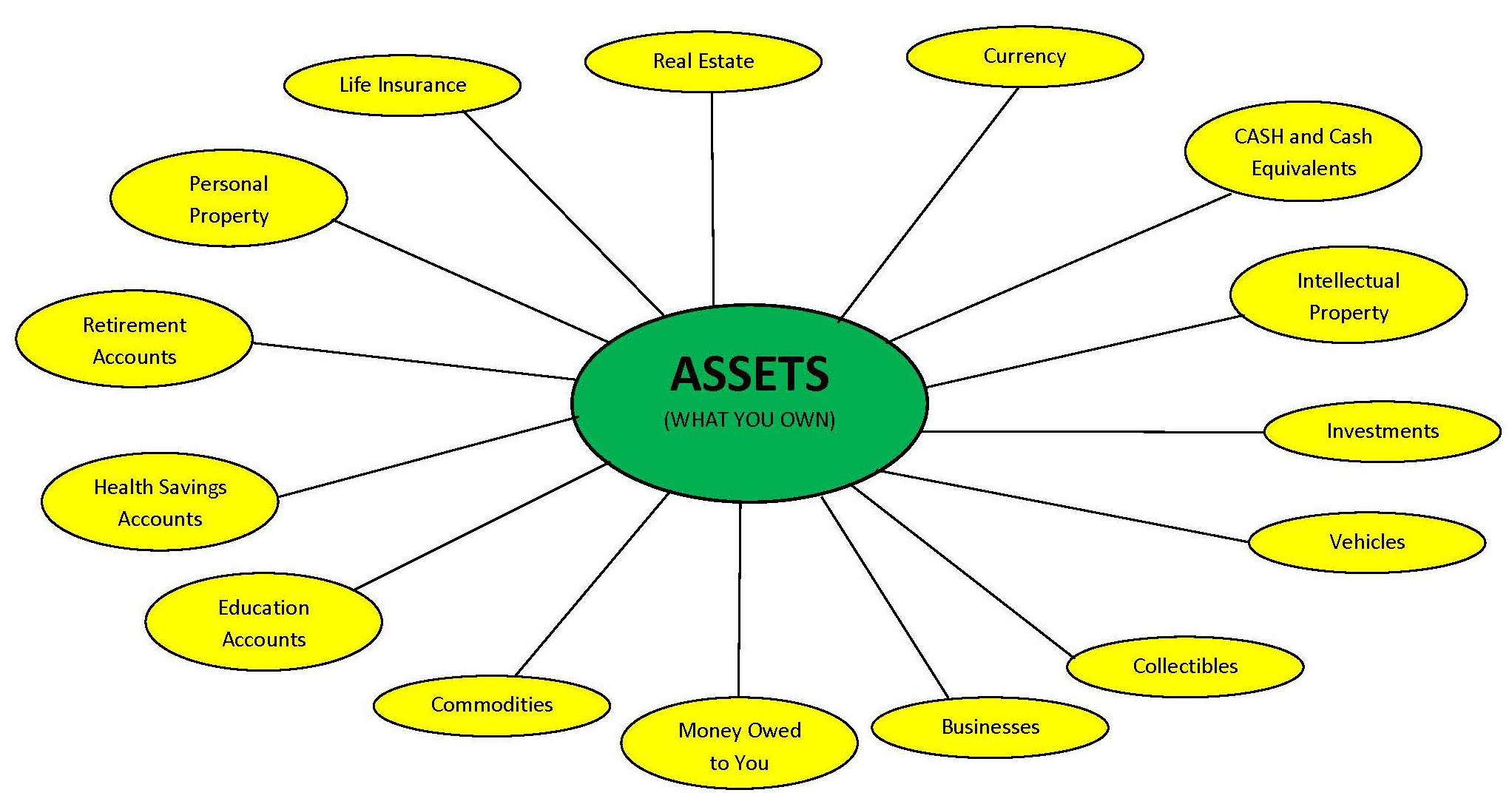
In Lesson #1, I asked you to complete the Asset Inventory Worksheet. It’s okay if you have not finished, but I want you to begin thinking about everything that you have. For my visual learners, go through each bubble, and check off what you currently OWN. So, do you have any ASSETS?
Important terms from this lesson:
- Asset Rich – The abundance of ASSETS.
- Asset Poor – The absence of ASSETS.
- Dynasties – Families who create, accumulate, protect and transfer ASSETS to future generations.
Action Step: Let’s Create some ASSETS!
The easiest asset to create is cash because most of us have at least $1! The cash in your pocket or pocketbook is sitting in the chamber ready to be fired at the next purchase. Instead of doing that, I want to challenge you to look at that cash as your opportunity to CREATE AN ASSET. Many of you have heard about the 52 week money challenge. I actually did this in 2013 along with some colleagues. On 1/3/14, I took that money to my financial adviser at Edward Jones and we put that cash into a Bond Fund (Investments Category). I will explain what that means in a future lesson. It’s that easy, I took something that was lying around ready to be spent and created an asset. I’m doing it again for 2014, but instead of holding it and then taking it to my adviser, I have set up a money market fund and each week, I transfer that week’s contribution to the fund. Now, my money is making money (interest – to be explained in the future).
I want you to take the 52 week money challenge for yourself and each of your children.
For you, follow the program without deviating. At the end of the year, you will have CREATED A CASH ASSET worth $1,378.
For your children, divide the normal 52 week challenge by the number of children that you have.
For example, if you have two children, the contribution for Week 1 is $1. You would split that so that each child has $.50 saved for Week 1.
Repeat this every week following the chart. At the end of the first month, you will open up a money market account for yourself and your children. Don’t worry, I will teach you about Money Market Funds and advise you about how to select the best option for you and your family.
Click the link to download the 52 Week Money Challenge Worksheet – http://bit.ly/1edTVUz
 Education and Action